A team of Cornell researchers used AI to investigate what sets originals apart from their reflections, and their algorithms learned to pick up unexpected clues.
Susan Daniel and Gary Whittaker discuss their collaborations and others across Cornell’s campuses that are working to better understand the COVID-19 virus.
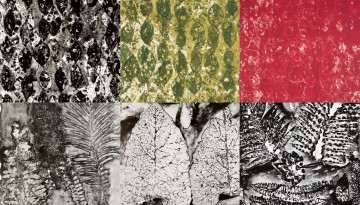
Greg Page’s fascination with nature has informed his 40-year career as an artist and associate professor of art. Prints made with plants he’s collected from around the world make up his final faculty show.
Cornell Atkinson has awarded seven Academic Venture Fund seed grants, totaling $1.1 million, for projects that engage faculty from eight Cornell colleges and 16 academic departments.
Tudorita Tumbar, professor of molecular biology and genetics, has received a Humboldt Research Award in recognition of academic excellence in molecular biology.
New research shows that in U.S. higher education, women are more likely than men to enter and complete college, but they are less likely to earn degrees in STEM fields.
In a keynote address June 25, Ronnie Coffman described how Cornell efforts coordinating a global response to a wheat pathogen averted a global food disaster and continues to safeguard wheat around the world.
A revised academic calendar anticipates Commencement ceremonies on back-to-back weekends next spring, including one for the Class of 2020, whose planned celebration this May was postponed due to the coronavirus pandemic.
The suspense is over: Cornell plans to welcome students back to its Ithaca campus for a fall semester blending in-person and online instruction, confident that decision best serves public health, President Martha E. Pollack announced June 30.
In a message to the Ithaca and Cornell Tech community, Cornell President Martha E. Pollack announced that the Ithaca campus and Cornell AgriTech will reopen for the fall semester.
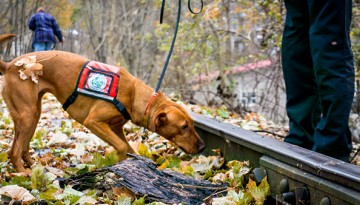
A Cornell-led team of researchers field-tested 14 active ingredients in insecticides, applied in a variety of methods, to understand the best treatment options against the Allium leafminer, a growing threat to onions, garlic and leeks.
The library has started offering services such as contactless curbside pickup and scanning and is planning other services and a possible phased reopening, in sync with the university community.