The Cornell Center for Materials Research held a symposium to explore using origami to create machines at the micron scale using atomically thin materials June 16-17.
Christopher Dunn, executive director of Cornell Botanic Gardens, received the Award of Merit from the American Public Gardens Association for his service to public horticulture.
Kaushik Basu, the C. Marks Professor of International Studies and professor of economics, began his three-year term as president of the International Economic Association June 23.
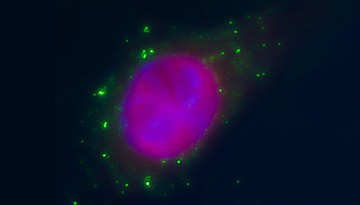
A Cornell multidisciplinary team devised a way to get a "time-lapse" look at the early formation of mesoporous silica nanoparticles, from six-sided crystals all the way to 12-sided quasicrystals.
An enzyme implicated in autoimmune diseases and viral infections also regulates radiation therapy's ability to trigger an immune response against cancer, Weill Cornell Medicine scientists found in a new study.
A recent food industry conference hosted by the Pillsbury Institute for Hospitality Entrepreneurship covered topics including the effect of technology on restaurants, trends in food retailing and the movement to end tipping.
Professor Emeritus Arthur Bloom, who taught at Cornell for 36 years and wrote what is considered the final comprehensive textbook on geomorphology, died May 31 in Ithaca at the age of 88.
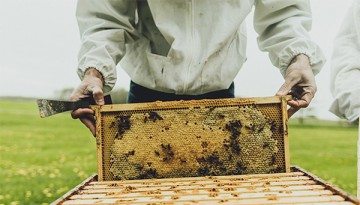
A small mite is causing big trouble for New York state's honeybee population and putting in peril the fruit and vegetable crops that depend on these pollinators.
Researchers Andrew Myers, Elaine Shi, Greg Morrisett and Rafael Pass will explore a new approach that will make it easier to use cryptography to build more-secure systems.
Cornell and IBM announced a joint research project June 23 that will use genetic sequencing and big-data analyses to help keep the global milk supply safe.
The School of Hotel Administration honored a hotel industry legend and a pioneer in ride-sharing apps at its ninth annual Cornell Hospitality Icon and Innovator Awards June 6 at The Pierre in Manhattan.
University of Pittsburgh professor Karen Matthews explored biological links to persistent social inequalities in childhood health during the 2017 Bronfenbrenner Lecture, held June 15 in Martha Van Rensselaer Hall.