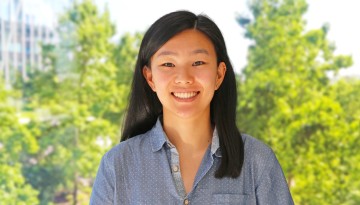
As generative AI reshapes how we communicate, work, and make decisions, Angelina Wang is making sure these systems serve everyone — not just a privileged few.
The LIGO-VIRGO-KAGRA team has announced a black hole merger similar to its first detection; a decade’s worth of technological advances allow unprecedented tests of General Relativity to be performed.
Six Cornell inventors developing projects in robotics, advanced materials, agriculture, biotechnology, AI for medical education and veterinary medicine have been selected for the spring 2025 cycle of the Ignite Innovation Acceleration program.
An investigation into Axie Infinity, a blockchain-based video game where users receive cryptocurrency tokens for playing, provides a case study for the possible future of Web3, a decentralized, community-run internet.
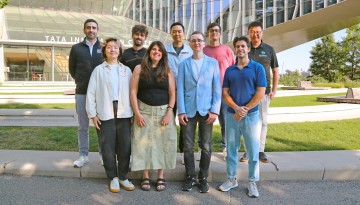
This year, 27 new faculty have joined the College of Arts & Sciences, enriching 17 departments and programs with their excellence in an impressive range of topics, including moral psychology, gravitational waves, Black contemporary art and more.