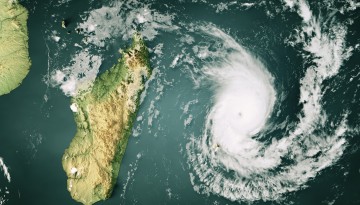
As world governments prepare the first-ever Global Stocktake, assessing whether they are living up to climate targets, Cornellians’ research is playing a critical role.
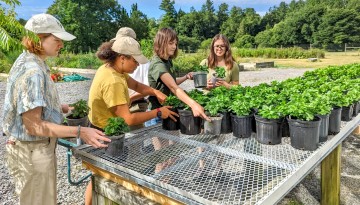
Cornell Botanic Gardens’ Learning by Leading program is an engaged learning initiative launched in 2021 to support a new generation of environmental leaders.
The smallest and shallowest bodies of water exhibit the greatest variability of greenhouse gas emissions over time, according to a paper that could help improve the accuracy of climate models.
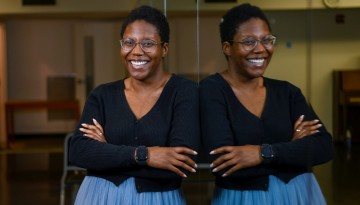
On June 2, the Ithaca theater organization Civic Ensemble will premiere “Fertile Grounds,” a community-based play that invites the audience onto a fictional farming cooperative involving people of color to explore the relationship of grief, community and wellness.
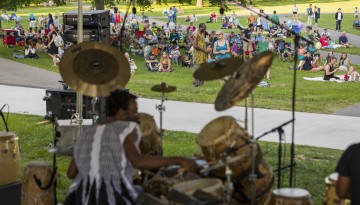
The 2023 Free Summer Events Series at Cornell will offer a fresh mix of entertainment and education open to the public. Presented by the School of Continuing Education (SCE), the events take place at 7 p.m. on select Wednesdays and Fridays, July 7 through July 28.
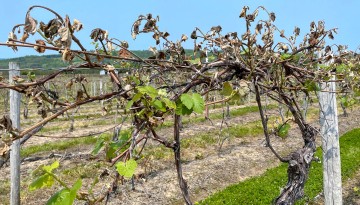
Following a mid-May freeze, two Cornell viticulture experts are advising grape growers in New York on how to rescue their season, as vineyards now face a reduced crop and economic loss.
Nineteen faculty and professional staff members in Cornell’s four state contract colleges have been selected for the 2022-23 State University of New York Chancellor’s Awards for Excellence.
Johnson received the inaugural Schwartz Research Fund Visionary Grant, worth $375,000, to support her research that will delve deeply into understanding how human milk nutrients contribute directly to infant gastrointestinal health.
A new study finds thathundreds of bacterial groups have evolved in the guts of primate species over millions of years, but humans have lost close to half of these symbiotic bacteria.