Elisha Cohn's second book, “Milieu: A Creaturely Theory of the Contemporary Novel,” also explores the methods authors are using to give animals a voice.
TRAPPIST-1 e, an Earth-sized exoplanet 40 light years away, may have an atmosphere that could support having liquid water on the planet’s surface in the form of a global ocean or icy surface.
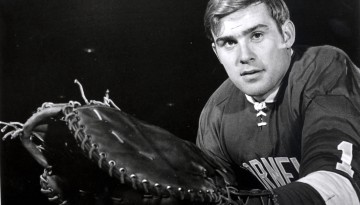
Ken Dryden ’69, the legendary Cornell men’s hockey goaltender who still holds the program record for career wins and backstopped the Big Red to its first national title in 1967, died of cancer Friday. He was 78.
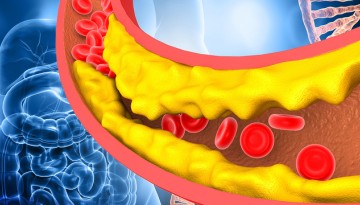
Cornell researchers have uncovered the surprising role played by a “three-tailed” fat molecule in cellular survival during heart attack and stroke: protecting the cells against damage when oxygen runs out.
A leading force in Quebec’s progressive francophone folk movement, Le Vent du Nord will perform in the first Dallas Morse Coors Concert Series (DMCCS) on Sept. 20 at 7:30 p.m. in Bailey Hall.
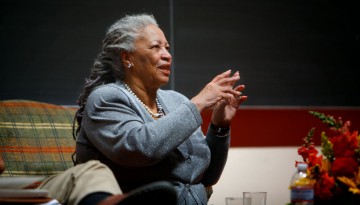
A four-day event featuring films, panels, workshops, the unveiling of a mural and other activities will celebrate the 70th anniversary of her degree, life and work. “Toni Morrison: Literature and Public Life” will take place Sept. 18-21.
Jean Frantz Blackall, a Cornell faculty member from 1958-94 who in 1971 became the first woman to receive tenure in what was then the Department of English, in the College of Arts and Sciences, died July 15 in Williamsburg, Virginia. She was 97.