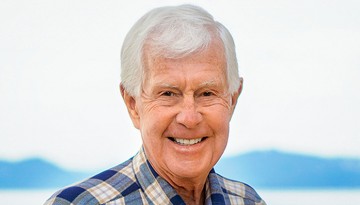
A $5 million gift from David A. Duffield ’62, MBA ’64, has established the Duffield Family Cornell Promise Scholarship, providing financial assistance to undergraduate engineering students in response to the COVID-19 pandemic.
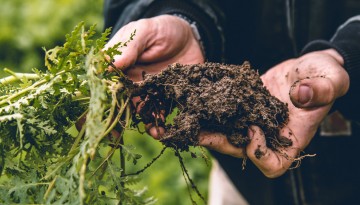
In Nature Geoscience, Cornell’s Johannes Lehmann says that scientists should develop new models that accurately reflect soil carbon-storage processes to draw down atmospheric carbon dioxide.
Engineering Professor Stephen Wicker chats with Dipayan Ghosh, Ph.D. ’13, who was an advisor at the White House and then a researcher at Facebook before writing a new book about digital privacy issues.
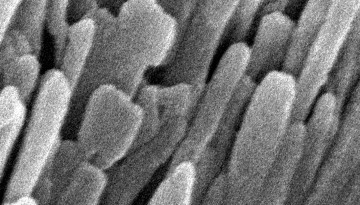
A collaboration between researchers from Cornell, Northwestern University and University of Virgina combined complementary imaging techniques to explore the atomic structure of human enamel, exposing tiny chemical flaws in the fundamental building blocks of our teeth.
A multidisciplinary, Cornell-led team of scientists will study how plant pathogens that travel the globe with dust particles might put crops at risk, especially in places where people struggle to eat.
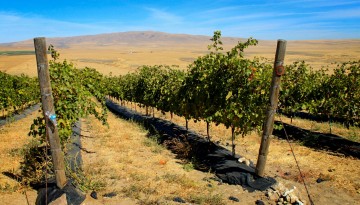
Some farmers will be facing a difficult conundrum amid climate change, according to a new study by researchers from Cornell and Washington State universities: either increasingly experience revenue volatility, or choose a more predictable decrease in crop yields.
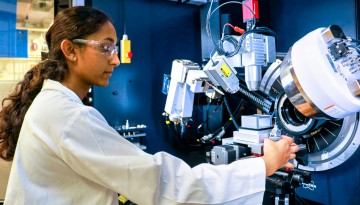
The Cornell Center for Materials Research is helping startup companies create new, innovative products by connecting them with university researchers while also boosting economic development in New York state.
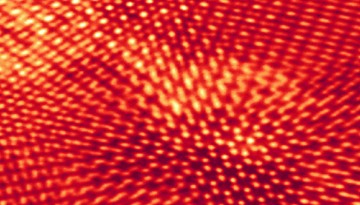
Cornell researchers developed a new form of electron microscopy that uses complex algorithms to achieve faster, more efficient imaging – and they obtained the best results by defocusing their detector and blurring the beam.