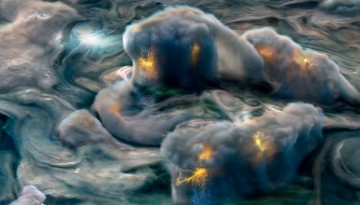
NASA’s Juno spacecraft – closely observing Jupiter – has unexpectedly discovered lightning in the planet’s upper atmosphere, according to a NASA/JPL study, which includes two Cornell researchers.
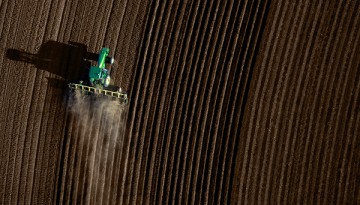
Cornell’s Art DeGaetano is one of nine scientists to co-author a USDA report to help the nation’s farmers and commercial agricultural managers reduce risk in the face of climate change.
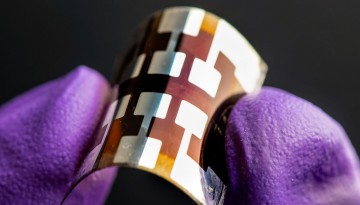
When it comes to the future of solar energy cells, say farewell to silicon, and hello to calcium titanium oxide – the compound mineral better known as perovskite.
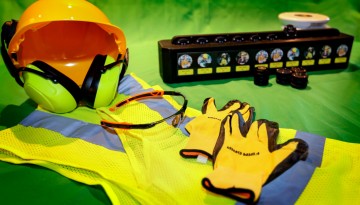
A Cornell-based startup has shifted its platform’s technology in response to the pandemic, ensuring social distancing in the workplace and enabling companies to bring employees back to work safely.
A $5 million gift from David A. Duffield ’62, MBA ’64, has established the Duffield Family Cornell Promise Scholarship, providing financial assistance to undergraduate engineering students in response to the COVID-19 pandemic.
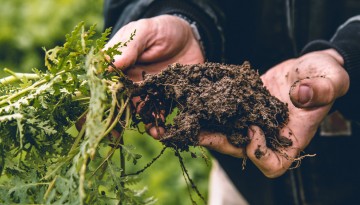
In Nature Geoscience, Cornell’s Johannes Lehmann says that scientists should develop new models that accurately reflect soil carbon-storage processes to draw down atmospheric carbon dioxide.
Engineering Professor Stephen Wicker chats with Dipayan Ghosh, Ph.D. ’13, who was an advisor at the White House and then a researcher at Facebook before writing a new book about digital privacy issues.
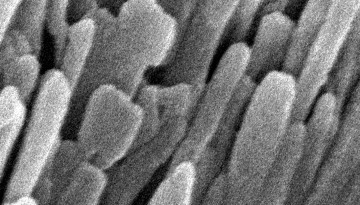
A collaboration between researchers from Cornell, Northwestern University and University of Virgina combined complementary imaging techniques to explore the atomic structure of human enamel, exposing tiny chemical flaws in the fundamental building blocks of our teeth.