Robert F. Smith ’85, founder, chairman and CEO of Vista Equity Partners, will be honored with Cornell Engineering’s 2020 Distinguished Alumni Award. It will be presented at a ceremony April 24 in Statler Hall Auditorium.
On topics ranging from oceanic disease to restraining invasive species from distant seas, Cornell faculty joined 10,000 scientists to discuss “Envisioning Tomorrow’s Earth” at the AAAS meeting in Seattle.
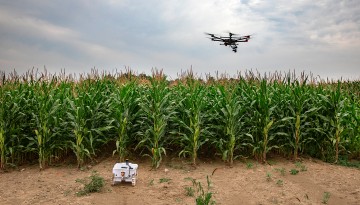
Students and faculty from the world’s five leading agricultural universities, including Cornell, will spend three days learning and brainstorming at the Cornell Initiative for Digital Agriculture’s second annual hackathon, Feb. 28-March 1.
Herb Voelcker, professor emeritus of engineering and a pioneer in solid modeling, the technology that enabled early computer-aided design, died Jan. 23 in Ithaca. He was 90.
Black Entrepreneurs in Training, now in its second year, aims to increase entrepreneurship among students of color at Cornell, and generate a visible group of black alumni who’ve founded successful companies.
Assistant professors Damek Davis, Christina Delimitrou and Robert A. DiStasio Jr. have won 2020 Sloan Research Fellowships from the Alfred P. Sloan Foundation.
Startup Zymtronix – an industrial biotech company housed in Cornell’s McGovern Center – has been selected as a challenge finalist at the Hello Tomorrow 2020 global summit, March 11-13 in Paris.