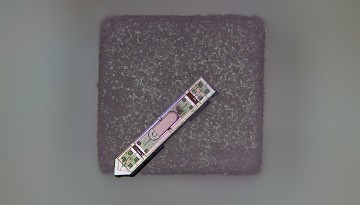
Cornell researchers and collaborators have developed a neural implant so small that it can rest on a grain of salt, yet it can wirelessly transmit brain activity data in a living animal for more than a year.
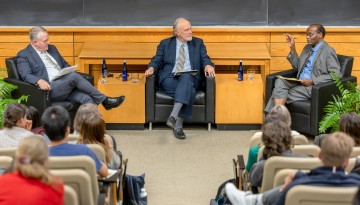
“The Future of Language Advocacy” on Nov. 15 will feature Cornell Translator Interpreter Program founders Fatema Sumar ‘01 and alumna Joyce Muchan ‘97.
A collaboration between Cornell Dining, the American Indian and Indigenous Studies Program (AIISP) and Cornell Botanic Gardens, Ǫgwahǫwéhneha:ˀ gyǫhéhgǫh or Food of the Original People, returns to Morrison Dining for its second year on Nov. 4.
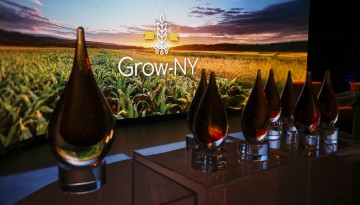
Twenty startup finalists will pitch their food and agriculture businesses – and their potential to impact upstate New York – for up to $1 million at the Grow-NY Summit, Nov. 12-13 at the Hotel Canandaigua.
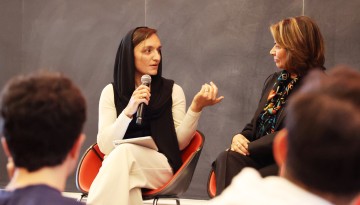
Former Costa Rican President Laura Chinchilla and Afghan human rights activist Zarifa Ghafari headlined a powerful discussion on the future of democracy during a fireside chat at Cornell University’s Brooks School of Public Policy.
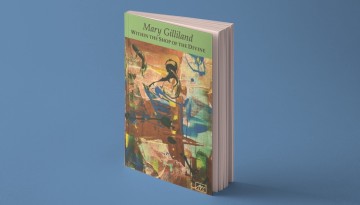
A Saint Anthony statue that glows in the dark lights the way into poems that connect people beyond death, visit holy sites, consider Satanic bargains and consult astrology.
The College of Architecture, Art, and Planning is adding a new summer intensive for high schoolers interested in studying the collective aspirations, methodologies, and processes involved in the design of cities.
A Cornell research project exploring how electric vehicles can serve as a flexible, dispatchable network of mobile energy storage to strengthen and decarbonize the power grid is advancing with a $1.8 million grant from the Bezos Earth Fund.