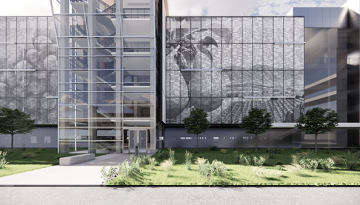
Using imagery and words that celebrate the surrounding valley as well as airport staff, Ramírez Jonas has revealed preliminary models of the full work, which will wrap the transportation hub's new six-story parking facility.
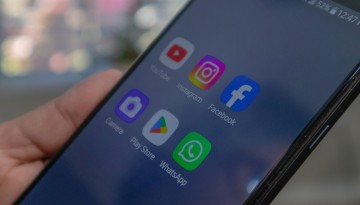
The spread of dubious headlines on social media isn’t just a right-wing thing – it's a social media thing, according to new research from David Rand ’04, professor in the Cornell SC Johnson College of Business and at Cornell Bowers.
Richard Thaler, a Nobel laureate who was a professor at the Samuel Curtis Johnson Graduate School of Management from 1978 to 1995, spoke Oct. 17 at the Alice Statler Auditorium.
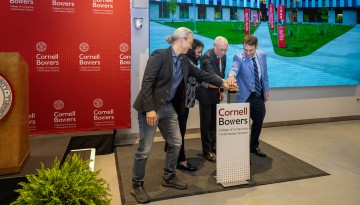
Cornell leaders, donors, faculty and students gathered Oct. 24 to officially dedicate the new building for the Cornell Ann S. Bowers College of Computing and Information Science. The building opened in August, on time and on schedule.
A keynote and faculty panel on Nov. 12 will focus on how faculty can communicate their generative AI-related expectations to students, how students can take accountability for their work, and what this looks like in practice.
Cornell has won three of 15 major grants from the Bezos Earth Fund, awarded to leverage artificial intelligence in the fight against climate change and environmental challenges.
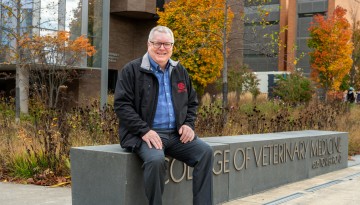
Dr. Lorin D. Warnick, Ph.D. ’94, the Austin O. Hooey Dean of Veterinary Medicine, has announced he will step down following the completion of his second term on June 30, 2026. Provost Kavita Bala has started a search for Warnick’s successor.
Cornell Atkinson has announced its 2025 Postdoctoral Fellows, who work jointly with a Cornell advisor and an external advisor from a partner organization to advance sustainability research.
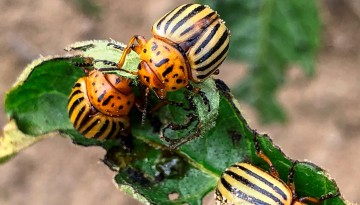
The first sprayable insecticide made of RNA can target and kill ravenous Colorado potato beetles while sparing most beneficial insects, making it a promising environmentally friendly option.
Tracking heart and lung health without wires or electrodes could be a game-changer for home care, assisted living or for patients who resist traditional wearables.
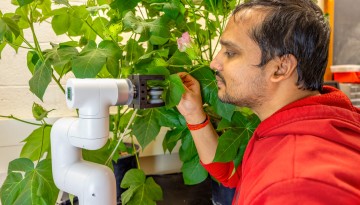
Examples of innovations in plant-human communication are part of a new Cornell University Library exhibit, “Hello, Human! The Emerging Science of Plant Communication and Smart Agriculture,” opening Nov. 6 at Mann Library gallery.