More than a century after pioneering engineer Marie Reith vowed to “do some good” in the world, her legacy endures through the new Marie Reith Class of 1921 Scholarship. Funded by Herb Fontecilla ’66, M.Eng. ’67, the gift honors the woman who helped him begin his Cornell journey and will support future first-generation engineers.
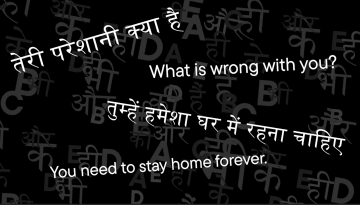
The artificial intelligence models underlying popular chatbots and content moderation systems struggle to identify offensive, ableist social media posts in English – and perform even worse in Hindi, new Cornell research finds.
Scientists at the Cornell College of Veterinary Medicine have found that administering a rotavirus vaccine to newborn mice via a shot, rather than an oral dose, increases its efficacy, particularly for at-risk newborns.
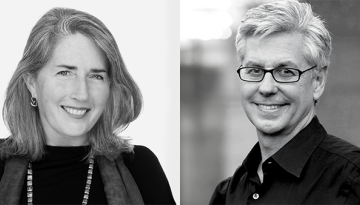
Rubacha Featured Speakers Susan Rodriguez ('81, B.Arch. '82) and Michael Manfredi (M.Arch. '80) will deliver lectures on Thursday, October 23, at 5:30 p.m. in the Abby and Howard Milstein Auditorium on Cornell's Ithaca campus. In advance of their talks, Rodriguez and Manfredi share insights drawn from their professional trajectories.
During a week on campus, author and editor Sam Tanenhaus, told stories every step of the way and reminded his listeners that politically complex and even morally ambiguous material makes for great storytelling.
Professor Debra Castillo, a Stephen H. Weiss presidential fellow and Emerson Hinchliff Professor of Hispanic Studies in the College of Arts and Sciences, died Oct. 5 in Ithaca. She was 72.
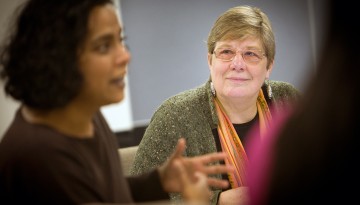
Cecilia L. Ridgeway, M.S. ’69, Ph.D. ’72, Stanford University’s Lucie Stern Professor of Social Sciences, Emerita, will deliver the annual Alice Cook–Lois Gray Distinguished Lecture on Oct. 23.
This summer, Smith turned his lifelong passion into purpose through a new internship program jointly offered by the Cornell Brooks School of Public Policy and the Cornell Lab of Ornithology. Under the guidance of Brooks School professor Sheila Olmstead, Smith explored how wetlands policies affect not only avian populations and migration patterns but also the human communities that depend on those ecosystems.
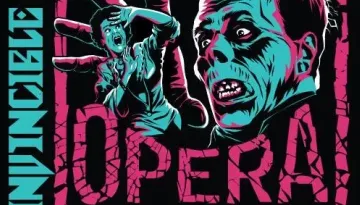
This October, Cornell Cinema will celebrate the 100th anniversary of the silent movie “The Phantom of the Opera,” with live musical accompaniment by The Invincible Czars.
Orpheus Chamber Orchestra with violin soloist James Ehnes will perform a program entitled “Postcards from Paris” in the next Dallas Morse Coors Concert Series (DMCCS) production of the 2025-26 season.