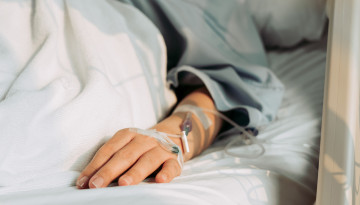
An overactive immune response in the brain may play a role in Dravet syndrome, a rare and severe genetic epilepsy that typically begins in infancy, according to Weill Cornell Medicine researchers.
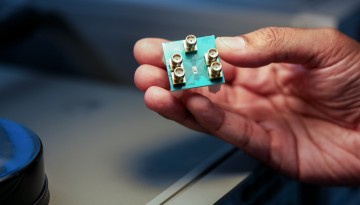
One year after unveiling a first-of-its-kind “microwave brain” microchip capable of computing on ultrafast data and wireless signals, researchers from the Cornell Duffield College of Engineering have shown how the chip can encode information into its own language.
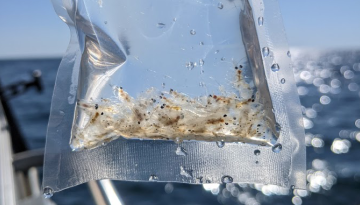
Cornell University’s James Watkins and Kade Keranen are leading a nearly $240,000 study to examine the abundance of mysid, small, shrimp-like crustaceans that are critical links in Lake Ontario’s aquatic food web.
Researchers studying ribosomes, AI and quantum computing are among 13 early-career professors from Cornell who’ve recently been awarded National Science Foundation Faculty Early Career Development Awards.
A Cornell research group has devised a way to generate an image of multiple people, incorporating the poses of all individuals to inform the image generation and make the scene more believable and accurate.
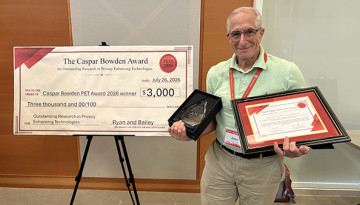
John Abowd, professor emeritus of economics, statistics, and data science at Cornell and Lars Vilhuber, research professor and executive director of ILR’s Labor Dynamics Institute, have received the 2026 Caspar Bowden PET Award for Outstanding Research in Privacy Enhancing Technologies.
LinkedIn and the Cornell Ann S. Bowers College of Computing and Information Science announce the fifth and final group of researchers to receive grants from their strategic partnership.
A new way to measure comorbidity can be used to accurately predict a patient’s risk of hospitalization and future healthcare costs across a population.
Light typically interacts with a material the same way whether it enters through the front or the back. Cornell researchers have demonstrated a simple route to breaking that symmetry, with possibilities for photonics and quantum information processing.