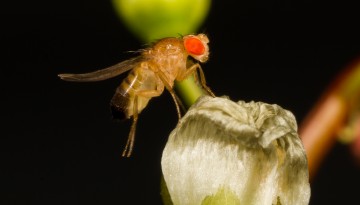
Researchers found that though the two species of giant hummingbird appear identical, the northern population stays in the high Andes year-round while the southern population migrates.
Cornell's newest interdisciplinary EEG lab could help faculty make breakthroughs in fields ranging from psychology to neurology to artificial intelligence.
The first-ever group of Undergraduate Global Scholars at the Mario Einaudi Center for International Studies are writers, artists and researchers with a common goal – to speak up for global free speech.
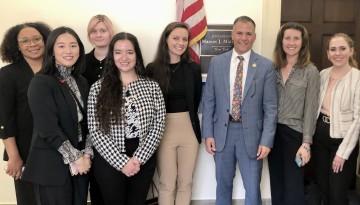
Twelve doctoral candidates traveled from the Ithaca campus and Weill Cornell Medicine in New York City to Capitol Hill April 17 for the annual Cornell Ph.D. Student Advocacy Day.
Dr. Myles Wolf will lead the institutions’ largest clinical and academic department, overseeing 16 divisions and nearly 2,250 physicians and scientists.
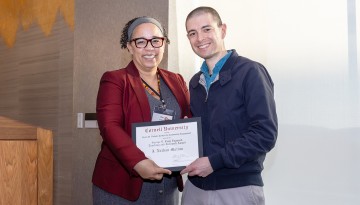
Students in COMM 2450 are studying the impact of the world’s first AI-related hiring transparency law. Assistant professor J. Nathan Matias received the George D. Levy Engaged Teaching and Research Award for leading the community-engaged project.
The newest episode of the Startup Cornell podcast features Trisha Beher ’25, founder of Women Leaders of Color at Cornell and the Art Shine Foundation.
Katie Engelhart ’09 is recognized for “for her fair-minded portrait of a family’s legal and emotional struggles during a matriarch’s progressive dementia."
The Department of Population Health Sciences at Weill Cornell Medicine and the Systems Engineering program in Cornell Engineering have teamed up to create a Health Systems Engineering pathway in the existing Master of Engineering program offered by Systems Engineering.