While a strain of highly pathogenic avian influenza virus has been detected in dairy cattle in nine states – not including New York state – the commercial milk supply continues to be safe, according to a panel of experts.
A unique project team enables Cornell undergraduates to use emerging open-source hardware to design, test and fabricate their own microchips – a complex, expensive process that is rarely available to students.
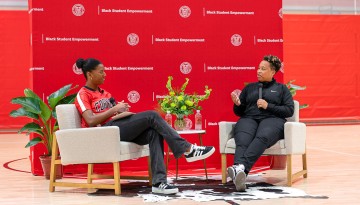
During a May 3 talk, Jennifer King, the first Black woman to coach full time in the NFL, touched on topics ranging from the importance of diversity and representation to the growing opportunities for women in athletics.
Collaborating on a physical object when two people aren’t in the same room can be extremely challenging, but a new remote conferencing system allows the remote user to manipulate a view of the scene in 3D.
A wave of yellow splashed down Cascadilla Creek Falls in Ithaca on Sunday, April 28, as 3,000 rubber ducks made their return to the 21st annual Cornell Cooperative Extension Tompkins County 4-H Duck Race. Hitting the water after a three-year hiatus, the ducks bobbed and weaved through a scenic gorge and turbulent water in front of hundreds of community members who gathered for a day of games, refreshments, prizes, and the opportunity to purchase chances on the numbered ducks in the race.
Applying a pretreatment ofaparathyroidhormone, commonly used to increase bone mass to combat osteoporosis, can help improve cartilage health and slow the development of osteoarthritis, Cornell researchers have found.
Faculty members from the ILR School and the colleges of Human Ecology and of Arts and Sciences have received Kendall S. Carpenter Memorial Advising Awards, which recognize sustained and distinguished contributions to advising undergraduates.
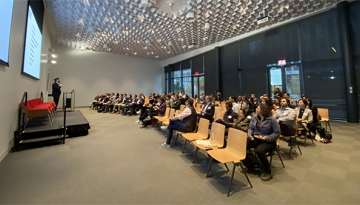
Big Red Ventures (BRV), Cornell University’s early-stage venture capital fund run by MBAs and other graduate students, presented its portfolio and announced a new investment during the Annual Meeting on April 18 at Cornell Tech.
Mayfest is “a festival of joy, music, friendships, and deep connections among the musicians and with the loyal and wonderful audiences,” said co-artistic director Miri Yampolsky.
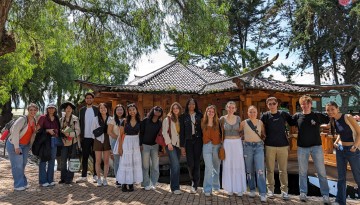
A recently piloted bilateral exchange course is providing new engaged learning opportunities for students from Ithaca, New York to Quito, Ecuador. The partnership between Cornell University and the Universidad San Francisco de Quito (USFQ), Cornell’s Global Hubs partner in Ecuador, is fusing collaboration in the classroom and in the field.
Inulin, a type of fiber found in certain plant-based foods and fiber supplements, causes inflammation in the gut and exacerbates inflammatory bowel disease in a preclinical model, according to a new study.
One in six assisted living facility residents is subject to verbal, physical or other aggression by a fellow resident in a typical month, according to the first large-scale study of the phenomenon.