With a professional mission of challenging assumptions about limits around disability, Wendy Strobel Gower has a long to-do list and a long list of accomplishments.
Thirteen student-community projects received grants through the Community Partnership Funding Board’s latest round of funding. Their shared goal: to bring social justice to the community.
Meng Zhou, M.S. ’92, Ph.D. ’96, has established the Andrew Novakovic and Meng Zhou Ph.D. Scholars Fund to support doctoral students in applied economics and management while expressing gratitude to his doctoral advisor.
Extreme heat is already harming crop yields, but a new report quantifies just how much that warming is cutting into farmers’ financial security. For every 1 degree Celsius of warming, yields of major crops like corn, soybeans and wheat fall by 16% to 20%, gross farm income falls by 7% and net farm income plummets 66%.
A consortium organized by Cornell and four other New York-based leaders in semiconductor research and development has been awarded $40 million by the U.S. Department of Defense to advance microelectronics innovation and manufacturing.
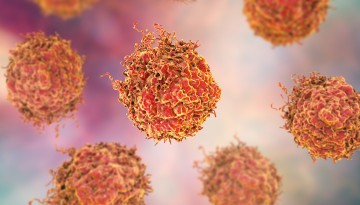
Non-cancerous cells called stromal cells, which are found in and around prostate tumors, may be useful in assessing these tumors’ potential to spread, and may even be targets for future prostate cancer treatments, according to a study led by researchers at Weill Cornell Medicine.
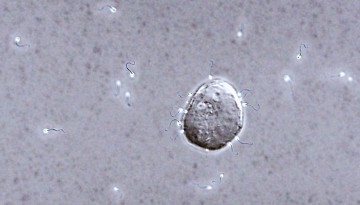
Researchers in the Baker Institute for Animal Health have created a genetically engineered mouse model that could shed light on the causes of human infertility and allow researchers to explore other areas of reproduction.
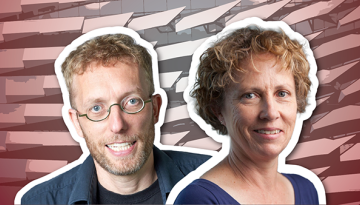
Kilian Weinberger and Claire Cardie join five of their Cornell colleagues in being named AAAI Fellows, in recognition of their significant contributions to the field of artificial intelligence.
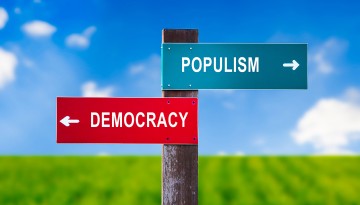
Democratic backsliding is occurring in an unprecedented number of wealthy countries once thought immune to such forces – the United States among them, finds a new analysis led by Cornell political scientists.
Cornell Outdoor Education is proud to present The Banff Centre Mountain Film Festival World Tour at Cornell University’s Bailey Hall for two nights that are sure to ignite passion for adventure, action, and travel.