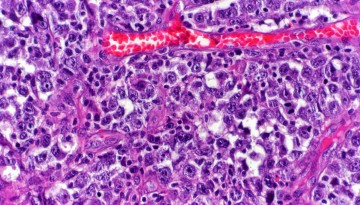
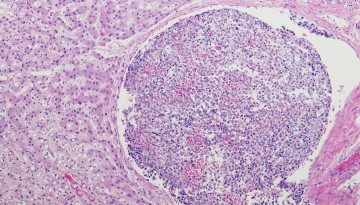
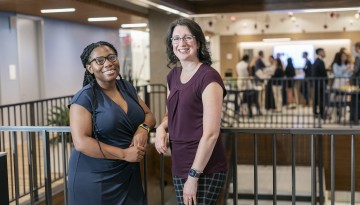
Weill Cornell Medicine and Columbia University have been awarded a five-year, $9.8 million grant from the National Cancer Institute to help combat cancer disparities fueled by persistent poverty.
How Earth’s inner core formed and evolved over time remains a mystery, one that a team of researchers is seeking to plumb with the help of earthquakes and a global nuclear monitoring system.
An atlas that catalogues gene activity and the levels of small molecules called metabolites in tumor samples offers a new way of identifying the deep mechanisms of cancer.
In a study by Cornell psychology researchers, female applicants for scholarships or jobs were viewed less favorably than males when study participants, acting as decision-makers, were shown “sexy” social media photos of the applicants.
Faculty in Cornell’s Action Research Collaborative (ARC) joined New York City and State policymakers and community members for ARC’s second symposium on June 22. The annual symposium is an opportunity for researchers, policymakers and community stakeholders to share their knowledge and advance equity in areas like nutrition and health, housing and social services, and youth development.
The fifth Future Professors Institute invited aspiring faculty to engage with current faculty from a diversity of backgrounds and institutional types and think about the balance between workload, writing and the workforce.
The Graduate School offers Summer Foreign Language Grants to help humanities students engage in summer learning opportunities. Thirteen doctoral students were awarded grants for study during summer 2023.
President Martha E. Pollack issued a statement, committing to Cornell’s “core values,” following the Supreme Court’s decision June 29 to strike down admissions policies at Harvard and the University of North Carolina.
Faculty from the Graduate School of Management at Cornell’s SC Johnson College of Business share best practices for capitalizing on advancements in AI.
A new vaccine distribution model expands the concept of vaccine coverage to include vaccinated person-days, which prioritize both the number of people vaccinated and the speed of getting shots into arms.
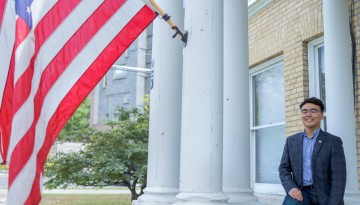
Andy Shin ’23, M.P.A. ’25, gained citizenship in November after 12 years in the U.S.; he'll celebrate his first Independence Day as a citizen with fellow student veterans.