When the COVID-19 pandemic swept across the nation, Nathan Bandler was only three months into his Cornell career. Despite the uncertainty at the time, Bandler was met by a feeling he had hardly experienced from any other employer – security.
“Empires of Complaints: Mughal Law and the Making of British India, 1765-1793” by Robert Travers won honorable mention from the Law and Society Association's James Willard Hurst Book Prize.
Twenty undergraduates visited Cornell June 4-18 for NextGenPop, an intensive summer training program aimed at increasing diversity in the field of population science.
Lena F. Kourkoutis, M.S. ’06, Ph.D. ’09, an associate professor in the School of Applied and Engineering Physics, who was internationally recognized for her advances in cryo-electron microscopy, died on June 24 at the age of 44 after living with colon cancer for two years.
The self-paced online program, offered by the Einhorn Center for Community Engagement, is available for free to Cornell faculty and staff seeking to incorporate community-engaged learning into their course or program.
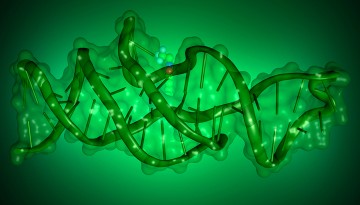
DNA can mimic protein functions by folding into elaborate, three-dimensional structures, according to a study from researchers at Weill Cornell Medicine and the National Heart, Lung, and Blood Institute, part of the National Institutes of Health.
In new research, Andrew Campana examines cinema-centered poetry in Japan from the 1910s and 1920s, discovering the ways poetry chronicles lasting human impressions left by “new” media.
Appointed to the Cary and Ann Maguire Chair in Ethics and American History this year, Tamika Nunley is using her time at the Library of Congress to work on The Black Reproductive Justice Archive, a collection of oral histories.
The Cornell Center for Advanced Computing is among five collaborators awarded a $3.5 million grant from the National Science Foundation to develop communications infrastructure to coordinate and connect multi-messenger astrophysics research across the globe.