A new center at Cornell will fight the rise of antibiotic resistance, a global health challenge that threatens to reverse critical advances in modern medicine.
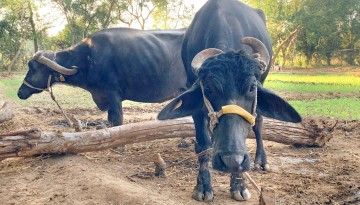
Cornell will teach small farmers in India – the world’s largest dairy producer – how to produce milk more efficiently while limiting greenhouse gas emissions.
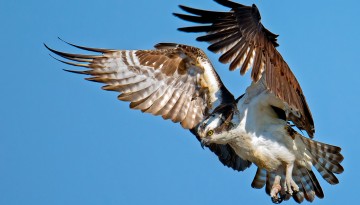
A new computer model using machine learning to predict migratory bird movement could open the door to new insights on migration timing, stopover sites, bird response to climate change, light pollution and more.
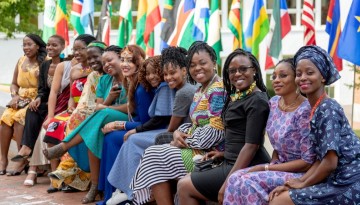
The Jeb E. Brooks School of Public Policy and the Mario Einaudi Center for International Studies will welcome 25 of Africa’s most promising emerging public management leaders for a six-week Leadership Institute sponsored by the U.S. Department of State.
White-tailed deer – the most abundant large mammal in North America – are harboring SARS-CoV-2 variants that once widely circulated but are no longer found in humans.
Native speakers often dominate the discussion in multilingual online meetings, but adding an automated participant that periodically interrupts the conversation can help nonnative speakers get a word in edgewise, according to new research at Cornell.
Richard T. Ford, a Stanford University law professor, will lead the event, “Derailed by Diversity: Racial Justice after Affirmative Action,” on Feb. 13 at 7 p.m. in Sage Chapel.
The construction of the Fred Young Submillimeter Telescope being developed by CCAT Observatory Inc., an international consortium of universities led by Cornell, is drawing to a close.
Students who have studied abroad will share their experiences at the Study Abroad Fair on Feb. 7 from 2:30 to 4:30 p.m. in the Willard Straight Hall Memorial Room.
Twelve Cornell and Weill Cornell Medicine faculty members – six of whom are also Cornell alumni – have been elected fellows of the American Association for the Advancement of Science, the world’s largest general scientific society.