Anti-fandom in the world of social media influencers can serve a social function by allowing people to critique norm transgressions, but it can also be a destructive force, a Cornell-led research team proposes.
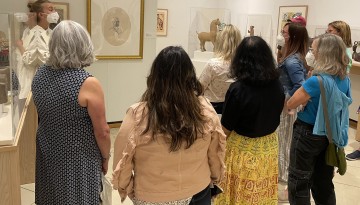
Three dozen elementary, middle, and high school teachers from across central New York traveled to Cornell’s Ithaca campus on June 28 for this year’s International Summer Studies Institute (ISSI), hosted by the Mario Einaudi Center for International Studies. Featuring experts from Cornell, Syracuse University, and TST-BOCES, the full-day workshop was held in person for the first time since 2019.
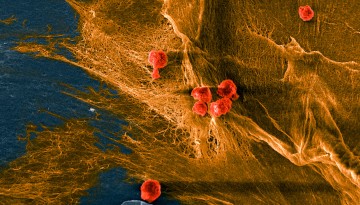
Producing biomaterials that match the performance of cartilage and tendons has been an elusive goal for scientists, but a new material created at Cornell demonstrates a promising new approach to mimicking natural tissue.
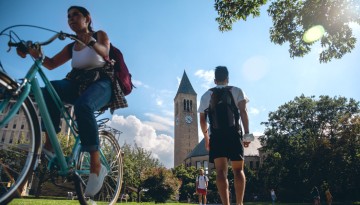
The platform, called Pathways, was designed to assist and inspire current students as they explore and make informed decisions such as choosing courses and majors.
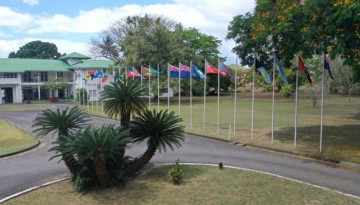
Under the new agreement, Cornell and CARPHA will explore ways to address the complex public health challenges facing Caribbean nations and provide Cornell students and faculty the opportunity to collaborate with Caribbean public health organizations.
This spring, College of Veterinary Medicine students honed communications skills by creating materials about zoonotic diseases in the course “Veterinary Practice: Public Health.”
Marc Glassman's longtime support of Maddie’s ® Shelter Medicine Program at Cornell comes from his love of animals, especially as it aligns with his approach of making a difference locally.
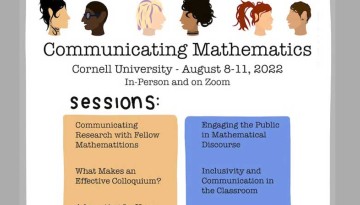
August 8-11, mathematics researchers and college-level teachers will discuss what it takes to communicate effectively among mathematicians, to students, and to the public.