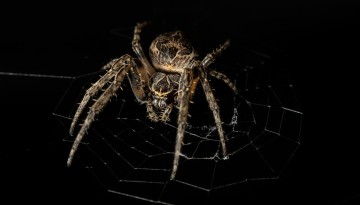
A study of orb weaver spiders finds their massive webs act as auditory arrays that capture sounds, possibly giving spiders advanced warning of incoming prey or predators.
A virtual exhibit of items illustrating the tragedy that had a huge impact on workplace regulations won an award from the American Industrial Hygiene Association.
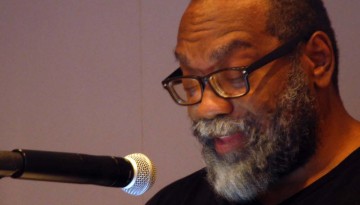
M.H. Abrams Distinguished Visiting Professor, poet and theorist Fred Moten will deliver a lecture on radical Black politics and the poetry of Amiri Baraka.
With the Hudson River rising from a fast-warming climate, the cities and towns along its banks now have an opportunity to save and reimagine their municipal waterfronts.
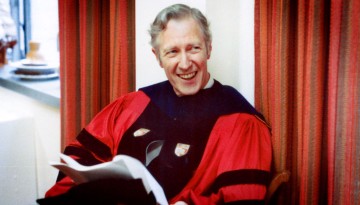
More than two years after the death of Frank H.T. Rhodes – Cornell’s ninth president, beloved for his leadership and eloquence – his family and friends gathered March 26 to celebrate his life.
For the first time since the Lab of Ornithology installed a live camera on the nest in 2012, Big Red, the female red-tailed hawk, has produced a fourth egg during breeding season.
A Boyce Thompson Institute scientist has developed an app that integrates multiple data analysis features into a single, easy-to-use tool for the metabolomics community.
Local officials, graduate students and faculty held a simulation exercise at the Cornell Jeb E. Brooks School of Public Policy on March 12 to work through questions around autonomous vehicles.
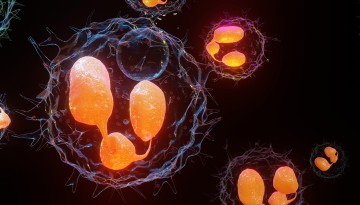
New research finds that cells are much more precise in how they ingest substances than previously thought, opening the door to potential treatments for several diseases.
A Cornell collaboration crossing medicine, law, technology and communication is aiming to encourage the use of health care benefits by refugees in the U.S. – who often suffer poor health but are using these entitlements less than they have in the past.
Developing a skill such as public speaking can be uncomfortable and difficult, but new research shows that instead of avoiding embarrassment, seeking it out can actually result in better motivation and personal growth.
Bruno Shirley won Cornell’s Three Minute Thesis (3MT) competition. 3MT challenges graduate students to present their thesis research compellingly to general audiences in just three minutes.