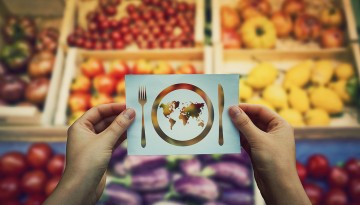
Forty-six high school students from 17 high schools across New York state came to the Cornell campus March 25 for discussions around innovative solutions to food security and climate change challenges.
The partnership will provide multi-phased programming focusing on frameworks and skills for intentional communication and collaboration to all engineering faculty members.
In a new paper, researchers take a step toward the day when deep learning will enhance scientific exploration of natural phenomena such as weather systems, climate change, fluid dynamics, genetics and more.
Global food systems expert Johan Swinnen, Ph.D. ’92, will explore lessons learned during the pandemic and the steps needed to prevent a hunger catastrophe in the first talk of a new speaker series dedicated to confronting the world’s most urgent and complex challenges.
Throughout the long upstate New York winter, while their peers are trying to stay warm indoors, members of the Cornell Surf Club grab their boards and wetsuits and ride the waves of Lake Ontario.
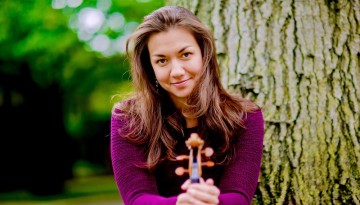
“Gayageum, Meet Violin” is a recital and discussion, set for April 16, featuring a preview performance of a new composition “Apba Hagoo, Nah Hagoo” by Ariana Kim for the Korean traditional zither (gayageum) and violin.
Cornell professor Jamila Michener testified March 29 before a congressional committee that universal health insurance coverage would not only address health inequities among people of color, but strengthen the U.S. democracy.
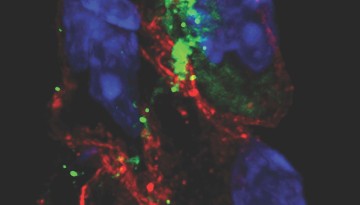
The SARS-CoV-2 virus can infect specialized pacemaker cells that maintain the heart’s rhythmic beat, setting off a self-destruction process within the cells, according to a preclinical study co-led by researchers at Weill Cornell Medicine, NewYork-Presbyterian and NYU Grossman School of Medicine.
Celebrating its 15th year at Cornell, the 2022 Soup & Hope speaker series returned to Sage Chapel after more than a year on Zoom with stories of transformation and empowerment – a theme that resonated with participants as the world continues to grow and change through the pandemic.
A study of more than 11,000 adolescents found that taxes on soda reduce consumption by boys but not girls, according to new research collaborated on by economics professor John Cawley.
Cornell engineers have created a deep-ultraviolet laser using semiconductor materials that show great promise for improving the use of ultraviolet light for sterilizing medical tools, purifying water and sensing hazardous gases.