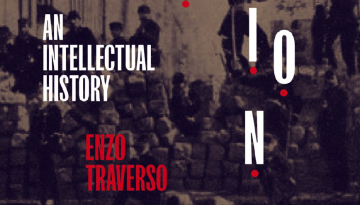
In “Revolution: An Intellectual History,” Enzo Traverso reinterprets the history of nineteenth and twentieth century revolutions through a constellation of images, from Marx’s ‘locomotives of history’ to Lenin’s mummified body to the Paris Commune’s demolition of the Vendome Column.
A letter signed by 163 Nobel Prize laureates, and drafted by Cornell Nobel laureate Roald Hoffmann, condemned Russia’s attack on Ukraine and expressed support for the Ukrainian people.
Working a nontraditional schedule, and checking in at all hours of the day, night and weekends, is not necessarily beneficial for the 21st-century workforce, according to new Cornell research.
Academic breaks after high school – even those lasting just a few months – can cause some students, especially those from disadvantaged backgrounds, to forgo enrolling in college altogether, according to new Cornell research.
Based on her in-depth study of ordinary people in Russia, Leila Wilmers explores how we engage the principles of nationalism in making sense of uncertainty and disruptive social change.
Eleven assistant or associate professors representing four colleges have recently received National Science Foundation Faculty Early Career Development Awards to support their research objectives.
Anesthesiology prices jump significantly after medical facilities contract with corporate physician management companies – especially those backed by private equity firms – and threaten to hike patient costs, according to new research.
A team from Cornell Bowers CIS has developed AutoPhoto, a robotic system that can roam an interior space and capture aesthetically pleasing photographs through a machine learning process.
Six Arts and Sciences faculty members focusing on mathematics and theoretical physics were announced as the 2022 Simons Fellows. The program enables recipients to focus on research by extending academic leaves from one term to a full year.
A new scholarship for first-generation undergraduate students has been established in the name of beloved government professor Isaac Kramnick, and will support students beginning this fall.
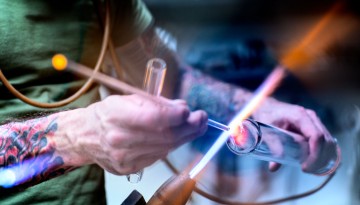
Karl Termini designs, creates and repairs unique scientific glassware, saving departments time and money and ensuring researchers get exactly the equipment they need.