The Donna and Dennis Lowe Scholarship will support CALS undergraduates with financial need as part of the university’s To Do the Greatest Good capital campaign.
Researchers in Nigeria are on a mission to upend taro leaf blight (TLB) epidemics across West Africa. The infectious plant disease attacks the leaves of taro, which has historically reduced taro yields by up to 50% and leaf yield losses of up to 95%.
The Provost’s Office of Faculty Development and Diversity is accepting nominations for the annual Faculty Award for Excellence in Research, Teaching and Service Through Diversity. The award, to be given to two faculty members, comes with a $15,000 prize.
A Cornell Tech clinic has created a new approach to helping survivors of domestic abuse stop assailants from hacking into their devices and social media to surveil and harass them.
The David M. Einhorn Center for Community Engagement is accepting nominations for two awards that honor faculty excellence in community-engaged teaching and research. Nominations for the George D. Levy Teaching and Research Award and the Kaplan Family Distinguished Faculty Fellowship are due Monday, April 4, 2022.
At a Cornell event on Feb. 22, former U.S. Ambassador to Ukraine Bill Taylor said Russian President Vladimir Putin appears intent on provoking a “horrific conflict,” but that he holds out hope for a diplomatic path that would avert all-out war.
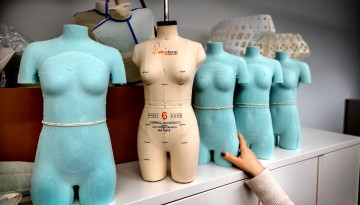
The technology, developed in the Department of Human Centered Design, aims to improve the fit and design of clothing and increase the sustainability of online shopping.