More than 300 Cornell employees and community members attended the seventh annual Inclusive Excellence Summit on March 24, gathering virtually from across the nation for a day of connection and reflection.
If you’ve poured your heart out on social media about a political issue, it might have felt cathartic – but likely was not persuasive, Cornell research finds.
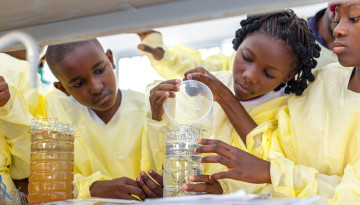
Doctoral student Cátia Dombaxe is bringing badly needed practical science education to impoverished areas of Angola through the STEAMpact Foundation, a nonprofit she founded in 2024.
Family physicians who report feeling burned out are nearly 1.5 times more likely to change practices or stop practicing medicine entirely than their peers who don’t report burnout.
On April 9 at 4:45 p.m. “Indigenous Voices in Abiayala/Latin America" will explore Indigenous media self-representation in Latin America – the region known as Abiayala in the Guna language.
The Zhu Family Graduate Fellowships for doctoral students in the humanities support three students per year and allow them to focus fully on their research.
Nobel Laureate John M. Martinis will speak about his research in quantum mechanics from 5-6 p.m. April 8 in the Rhodes-Rawlings Auditorium, Room KG70 in Klarman Hall.
Guðni Thorlacius Jóhannesson, former President of Iceland (2016–2024) and current Professor of History at the University of Iceland, visited Cornell University last week to deliver three Messenger Lectures, reflecting on his experience as Iceland’s head of state and the changing geopolitical and cultural landscape of Iceland.
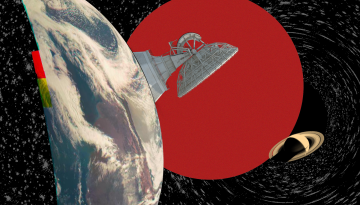
Since the early days of modern cosmic exploration, Cornell scientists have led the way, from guiding rovers through the red dust of Mars to searching for other life in the universe; and from modeling exotic stars to detecting the faint ripples of gravitational waves.