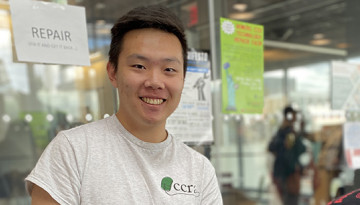
At the fourth annual Earth Day Repair Fair, local experts will help students, staff, faculty and community memebrs to repair or recycle their bring broken and aging electronics.
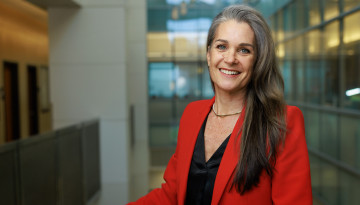
Ceridwyn King has been named as the new Dimond Family Dean of the Cornell Peter and Stephanie Nolan School of Hotel Administration, part of the Cornell SC Johnson College of Business.
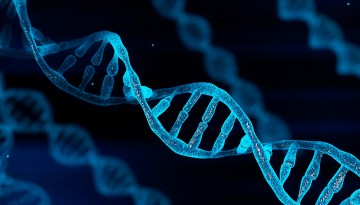
A new study helps resolve a long-standing paradox in biology about genome architecture and cell function, which may provide insights into certain developmental disorders and cancers.
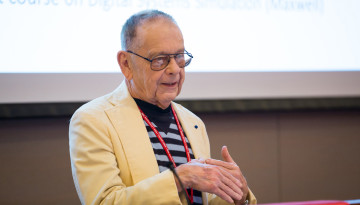
William L. Maxwell ’57, Ph.D. ’61, the Andrew Schultz Jr. Professor Emeritus of Industrial Engineering and a pioneer in the field of simulation and scheduling, died March 31 in Indiana, Pennsylvania. He was 91.
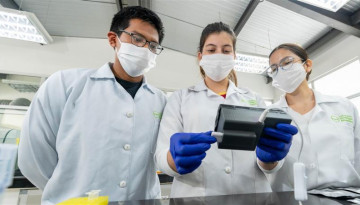
Five next-generation point-of-care technologies have been selected for funding by PORTENT, a Center for Point-of-Care Technologies for Nutrition, Infection, and Cancer at Cornell, focusing on crucial healthcare across the globe.
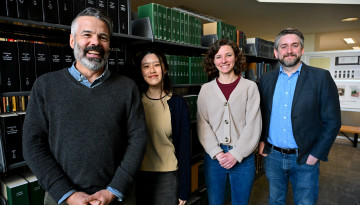
Matt Kibbee is honored for his work on training librarians in evidence synthesis, the art and science of gathering and combining results from multiple studies.
A lecture featuring sociologist Steven Yearley on carbon sinks and climate policy will launch the Trevor Pinch Memorial Lecture Series on April 22 – Earth Day.
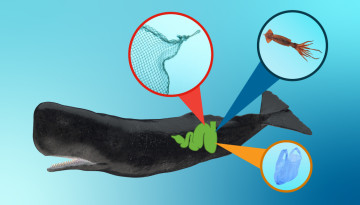
The whales that stranded on southeastern U.S. coastlines between 2020-22 were emaciated and malnourished, with ingested fishing gear and marine debris found in two of them.