Iterate Labs obtained funding for its artificial intelligence business that uses wearable sensors and computer vision to drive factory production and safety.
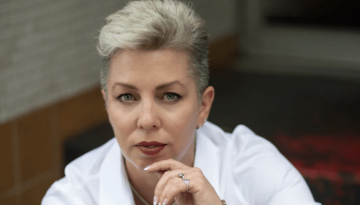
Perceived indifference can generate feelings of dehumanization toward the noncommittal person, according to new research from Kaitlin Woolley ’12, assistant professor of marketing at the Cornell SC Johnson College of Business.
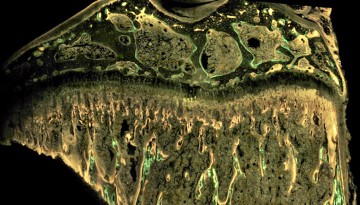
A Cornell-led collaboration has found that bones may grow in response to breast cancer tumors – possibly as a preemptive defense mechanism against metastasis. The findings could point the way to future diagnostic tests and therapeutic treatments.
Cornell researchers have created what is potentially the world’s smallest self-folding origami bird by using micron-sized shape memory actuators to bend and hold its form.
President Martha E. Pollack denounced all recent violence against Asians and Asian Americans and encouraged anyone who has experienced or witnessed an act of bias in the Cornell community to report it.
Jeremy Scheck ’22 started making TikToks about cooking in his Collegetown apartment last year. Since then, he’s gained 2 million followers and a spotlight well beyond his expectations.
On March 10, Alexander Chung ’21, Anjan Mani ’23 and Felipe Santamaria ’23 helped rescue a 62-year-old man who’d fallen into the 40-degree water of Cayuga Lake while fishing off a pier with his two grandsons.
More than 100 people participated in the Cornell Online Learning Community's seventh annual event, “What Works and What’s Next in Online Teaching and Learning?”
During the Employee Assembly Open Forum on March 12, President Martha E. Pollack and senior leaders reflected on ways Cornell has pursued its mission throughout the pandemic.
Michael Fontaine’s lively new translation of Cicero’s ancient text on humor, “How to Tell a Joke: An Ancient Guide to the Art of Humor,” amuses as well as instructs – as Cicero no doubt intended.
In 24 hours, donors raised a record-breaking $10 million to support Cornell students, programs and research on the university’s seventh Giving Day, March 11.