Cornell has a long-standing commitment to help lead the fight against climate change, and on April 2 it became a founding member of the International Universities Climate Alliance.
A project led by Janis Whitlock, research scientist in the Bronfenbrenner Center for Translational Research, provides a space for people around the world to share stories about life in the age of COVID-19, snapshots that will help researchers understand how people coped during the pandemic.
Many Cornell faculty members use their own experience as first-generation college students to mentor their current first-gen students. Cornell offers numerous resources to empower first-gen students to thrive at college.
Cornell administrators are reminding everyone in the university community – particularly students living off campus – how important it is to be counted in the 2020 U.S. census.
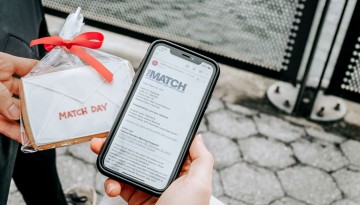
While the traditional in-person Match Day celebration hosted on Weill Cornell Medicine’s campus was canceled due to COVID-19, fourth-year graduating students found creative ways to celebrate their accomplishments.
Food industry professionals can learn how the novel coronavirus might affect their workers and their consumers, thanks to a series of virtual office hours held by staff at the Institute for Food Safety at Cornell.
In a message to the Cornell community, President Martha E. Pollack detailed four principles university leaders will use to guide decisions made in the wake of the COVID-19 pandemic.
Faculty, students and staff at Cornell Law School are responding to the coronavirus pandemic by giving businesses and workers in central New York legal assistance.
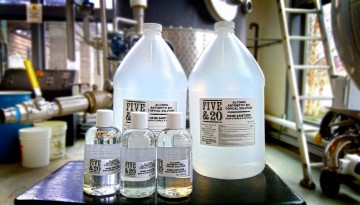
In the battle to keep workers safe during the COVID-19 pandemic, nearly 40 craft distilleries in New York state have turned to making hand sanitizer with guidance from Cornell AgriTech.
Transdiagnostic processes, which are subtle ways that people think, act and cope, help explain why mental health problems become more common in girls as they reach puberty, according to new Cornell research.
A biomanufacturing company spun out of Cornell research is seeking to rapidly translate an antibody therapy against COVID-19 by using cell-free biotechnology based on glycoengineered bacteria.