Cornell researchers tallied the environmental benefits of New York City’s congestion pricing program and found air pollution dropped by 22% in Manhattan, with additional declines across the city’s five boroughs and surrounding suburbs.
Scholars converged at Cornell to talk about lessons policymakers and elected officials could glean from their research into the COVID pandemic to help deal with the next public health emergency.
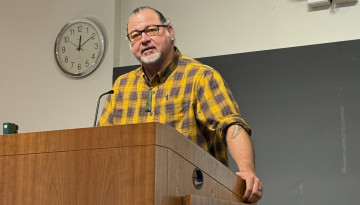
Sweeney Windchief, professor of adult and higher education at Montana State University, discussed mentoring relationships during a 2025 MAC Public Keynote.
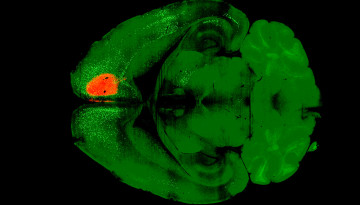
An international collaboration led by Cornell researchers used a combination of psilocybin and the rabies virus to map how – and where – the psychedelic compound rewires the connections in the brain.
Electrons can be elusive, but Cornell researchers using a new computational method can now account for where they go – or don’t go – in certain layered materials.
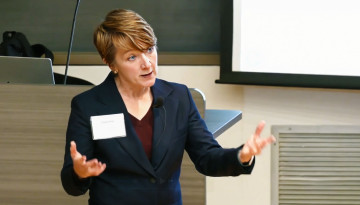
Encouraging a growth mindset and being more subtle about the pursuit of power and dominance are among the ways women might rise through the ranks in the workplace, according to a new model that maps women’s pathways to influence.
A short interaction with a chatbot can meaningfully shift a voter’s opinion about a presidential candidate or proposed policy in either direction, new Cornell research finds.
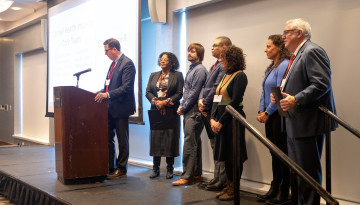
More than 75 employees were honored in this year’s ceremony, representing Cornell’s Ithaca campus as well as Weill Cornell Medicine in New York City and Weill Cornell Medicine-Qatar.
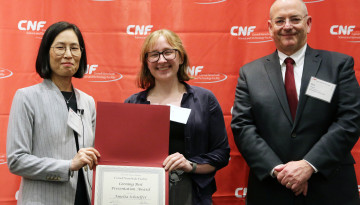
Cornell’s NanoScale Science and Technology Facility (CNF) convened researchers, industry partners, and national collaborators for its 2025 Annual Meeting on November 18, highlighting advances across photonics, quantum devices, semiconductor fabrication, sustainability, and life sciences.
Cornell researchers have developed a new transistor architecture that could reshape how high-power wireless electronics are engineered, while also addressing supply chain vulnerabilities for a critical semiconductor material.
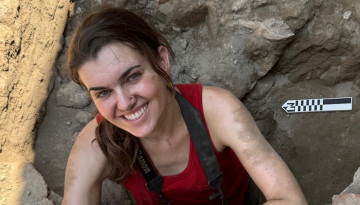
Based on a 2018 conference co-organized by Caitie Barrett, professor of classics, and Jennifer Carrington, Ph.D. ’19, the book focuses on houses and households during a period when Egypt was ruled by Greeks and then by Romans.