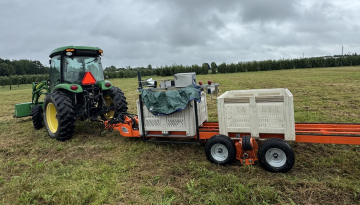
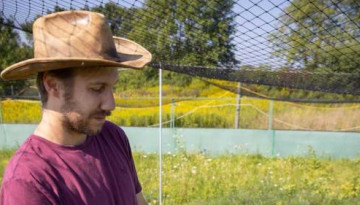
Ficio, a startup founded by Youhanna Meleka, M.Eng. ’26, is developing an AI platform for the food supply chain that can run on different machines and tackle very different jobs – from sorting apples in an orchard to turning potatoes into french fries.
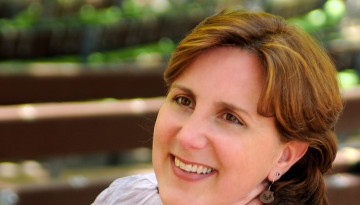
Riley Culberg, assistant professor, is a member of the science team for Snow4Flow, a new NASA mission to study how much ice glaciers contain and how much new snow they receive.
Upshaw, winner of five Grammys and a MacArthur Foundation Fellow, will present “Salon Solèy: Inhabiting Text & Music in Contemporary American Art Song,” at 7:30 p.m. Oct. 22 in Barnes Hall.
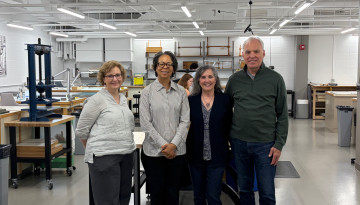
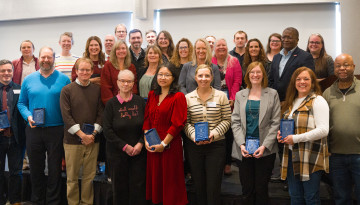
The Cornell Duffield College of Engineering celebrated its fifth annual EPICC Awards on Oct. 8 in Statler Auditorium, recognizing faculty and staff whose work exemplifies the college’s core values of excellence, purpose, innovation, community and collaboration.
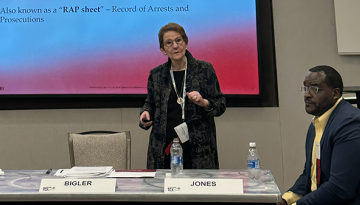
Esta Bigler, director of Labor Law and Employment Programs at the ILR School, presented on the topic of fair chance hiring at the New York State Bar Association’s Labor and Employment Law Section fall meeting, held in Ithaca earlier this month.
Cornell University’s “Unmasking the CCP” lecture series will feature talks by former U.S. Ambassador Michael McFaul Oct. 23 and historian Frank Dikötter Oct. 27 on democracy, communism and China’s international role.