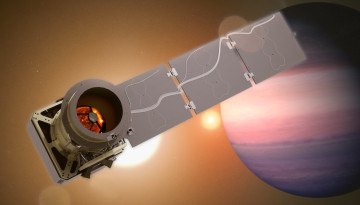
Tasked with studying exoplanet systems around small stars, the refrigerator-sized satellite is the first in NASA’s Astrophysics Pioneers program – small-scale missions designed to train early-career scientists, including Trevor Foote, Ph.D. ’24, a former member of the research group led by faculty member Nikole Lewis.
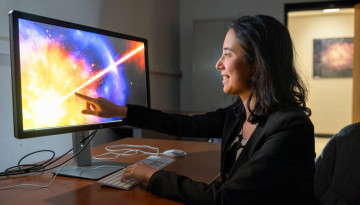
With the 2026 Newton Lacy Pierce Prize, the American Astronomical Society recognizes Anna Y. Q. Ho’s pioneering investigations of extreme explosions powered by stellar death.
A new study examines the growing demand and environmental impact of wearable health care devices such as glucose monitors and ultrasound patches, and offers potential solutions to reduce their carbon footprint.
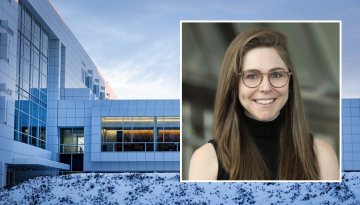
Fischer investigates how cells detect and repair organelle damage, and how these processes influence inflammation and the progression of neurodegenerative disease.
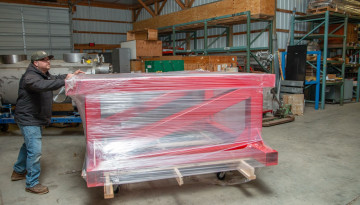
Behind a world-leading telescope bound for Chile is a team of engineers, machinists, electronics specialists and riggers at Cornell. Meet the specialized staff whose expertise is helping push cosmology to new frontiers.
Cornell Engineering faculty and students gathered Dec. 18 in Upson Hall to celebrate the first participants to complete Radical Humanity in Research, a new program designed to strengthen the human foundations of high-impact research.