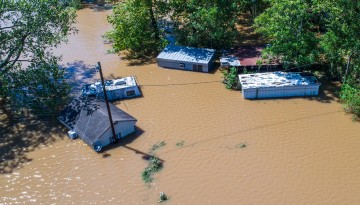
Faculty from the Cornell SC Johnson College of Business discussed whether businesses have the right incentives to address the climate crisis, or if policy intervention is needed.
Minorities and lower-income people are more likely than high-income people and whites to consider human factors such as racism and poverty to be environmental issues, a study co-led by Cornell researchers found.
As plants try to strengthen their defenses against nematodes, those parasites try to outsmart them. New research shows that nematode species that move from plant to plant cause more than mechanical damage.
A Global Climate Change Science and Policy course supported by an Engaged Curriculum Grant is helping Cornell students and researchers lead efforts in Armenia to mobilize action related to agriculture.
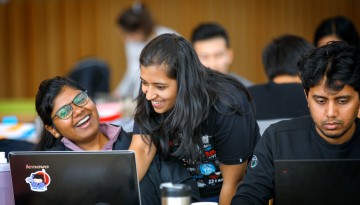
Students in fields ranging from computer science and engineering to business, agriculture and animal science convened at the second Digital Agriculture Hackathon, Feb. 28-March 1, with a shared purpose: to combine their disparate skills to brainstorm ways to make the world a better place.
Researchers from Cornell and the Mars Global Food Safety Center can complete whole-genome sequencing to determine salmonella serotypes in two hours and the whole identification process within eight hours.