Peter Sullivan, a fifth-year doctoral student, is the winner of this year's Harry and Samuel Mann Outstanding Graduate Student Award for his research on ALS and FTLD.
A new study shows how milkweed toxins affect the web of creatures that surround the predatory aphids, especially ants, which frequently serve as aphid protectors.
Justine Vanden Heuvel, associate professor of enology and viticulture in the College of Agriculture and Life Sciences, earned this year’s research award from the New York Wine and Grape Foundation.
A new study of mosses brings scientists one step closer to solving a mystery in plant biology: how plants made the transition from water to land 450 million years ago.
The new major in the College of Arts and Sciences and the College of Agriculture and Life Sciences was approved March 8 by the Cornell Faculty Senate and, pending state approval, will launch in fall 2018.
The College of Agriculture and Life Sciences announced March 8 an agreement with SUNY Broome Community College that lets students complete a degree in Cornell’s Department of Food Science.
Arguments that support legalizing recreational marijuana are more convincing than arguments against it, according to Jeff Niederdeppe, associate professor of communication. Top pro-pot arguments emphasize the economic benefits.
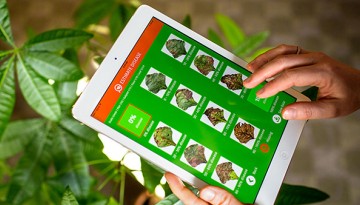
A new iPad app, called Estimate, connects plant professionals with a portable database of photographs of diseased leaves to help determine plant disease severity.