Cambridge University Press called upon Derk Pereboom to write a definitive overview of research on the free will debate for its Philosophy of Mind Elements series, which provides succinct overviews of key topics.
The Cornell Center for Cultural Humility facilitates culturally responsive research, practice and policy that is inclusive across race, ethnicity, class and other markers of identity.
The Cornell Center for Social Sciences grant program, which supports social science research by Cornell faculty members, has awarded $85,000 to 10 professors for their 2022-23 CCSS Faculty Fellows program.
Twenty-six students with businesses ranging from drinking water treatment to alternative medicine to kitchen robots, received fellowships to work on their businesses this summer.
Morten H. Christiansen, William R. Kenan, Jr. Professor of Psychology in the College of Arts and Sciences, has been elected a foreign member of the Royal Danish Academy of Sciences and Letters.
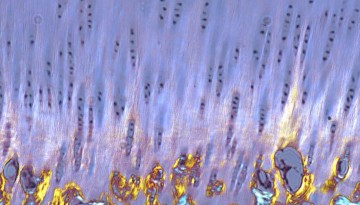
Four Cornell faculty members from three different colleges received the 2022 Kappa Delta Ann Doner Vaughn Award for their collaborative research on the mechanics and composition of articular cartilage and its relevance to disease.
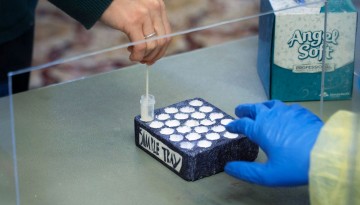
Professor of economics Jörg Stoye proposes new methods of deriving the prevalence of a disease when only partial data is available — with applications for epidemiology and public health policy.
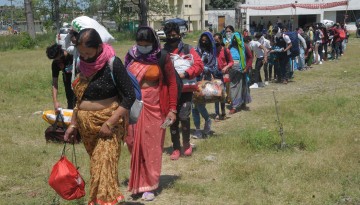
This year’s Lund Critical Debate, “Migration in the Age of Pandemics,” on February 16 will explore ways to promote the best public health outcomes worldwide and protect human rights, as waves of people cross national borders.
Cornell will celebrate the birthday of alumna and Nobel Laureate Toni Morrison MA ’55 from 3-5 p.m. Feb. 18 with a screening of the film “The Foreigner’s Home” (2017), followed by a roundtable discussion.