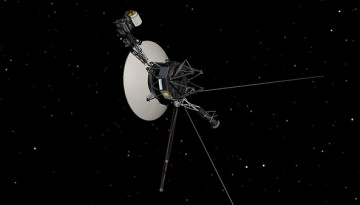
After 360 engine burns, 2.5 million executed commands, 635 gigabytes of gathered data, 162 moon flybys, 4.9 billion miles traveled, NASA’s 20-year Cassini mission ran the last lap of its historic scientific mission Sept. 15.
Scholar Stephanie W. Jamison will speak on “Adulterous Woman to Be Eaten by Dogs: Women and Law in Ancient India” as a part of the University Lecture Series. The talk, Sept. 21 at 4:30 p.m. in Cornell’s Rhodes-Rawlings Auditorium, Klarman Hall, is free and open to the public.
Noliwe Rooks' new book “Cutting School: Privatization, Segregation, and the End of Public Education” traces the financing of segregated education in America, beginning with Civil War reconstruction to today.
NASA is calling the Cassini mission’s last hurrah the Grand Finale. After cruising seven years to Saturn and spending 13 years strolling its neighborhood, on Sept. 15 the spacecraft ends its mission by plunging into the ringed planet’s atmosphere, breaking into fiery shards.
To honor Cornell’s research role in the Cassini spacecraft’s achievements, the Department of Astronomy will hold a community farewell celebration Sept. 15.
Historian María Cristina García examines the challenges and history of refugee and asylum policy in the United States in her new book, "The Refugee Challenge in Post-Cold War America."
Freshman Abu Qader is running a company, GliaLab, which is developing software that can improve the accuracy of breast cancer diagnoses, especially in developing countries.