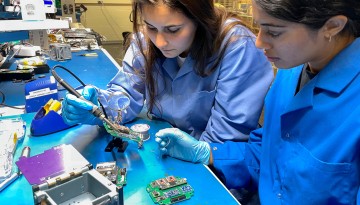
Cornell is spearheading the New York Consortium for Space Technology Innovation and Development – a new initiative aimed at bolstering U.S. space technology research and manufacturing by uniting industry, academic and government partners.
The 18 students in the College of Engineering's Kessler Fellows program recently completed funded summer internships at a startup of their choice. Four interns went into depth about their experiences.
To bridge the data gap between volcanologists and atmospheric scientists, Cornell researchers have depicted volcanic ash samples to learn how this tiny dust plays a big climate role.
Glaciers could become a powerful tool for monitoring some volcanoes, according to new Cornell research that shows for the first time how the altitude of glaciers could signal the threat of an eruption.
Vesna Bacheva, recipient of a 2023 Schmidt Science Fellowship, collaborates with CROPPS to pioneer innovative technologies and models aimed at investigating the signaling and nutrient transport processes within plants.
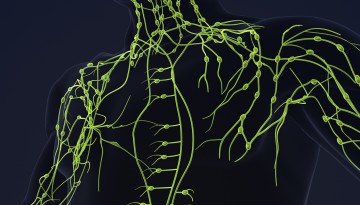
A Cornell-led collaboration built a 3D in-vitro model of a functional human lymphatic vessel that revealed a surprising mechanism that can jam up the necessary drainage
Cornell scientists have replaced the harsh chemical processing of rare earth elements – used to power electric cars, wind turbines and smartphones – with a benign practice called biosorption.
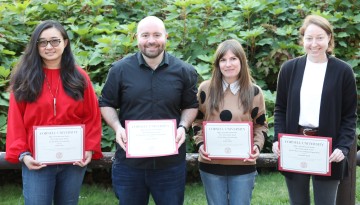
Six postdoctoral scholars were honored with Postdoc Achievement Awards as part of Cornell’s participation in National Postdoc Appreciation Week. The awards recognize excellence in community engagement, leadership and mentoring.