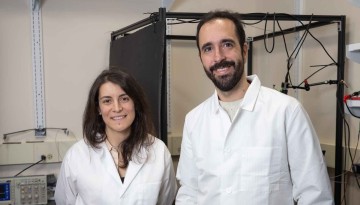
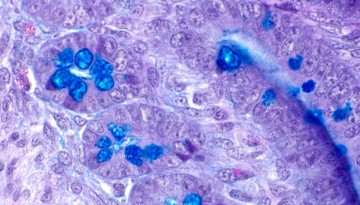
A pair of researchers in the Department of Neurobiology and Behavior are designing new technology and research methods to discover how brain circuits support learning and memory.
The Cornell chapter of the National Society of Black Engineers is celebrating Black History Month with a variety of events expected to be well attended thanks to the student organization’s recent efforts to boost membership and revitalize its programming.
Students, faculty and administrators have quickly mobilized relief efforts and support for those affected by the 7.8-magnitude earthquake that devastated Syria and Turkey.
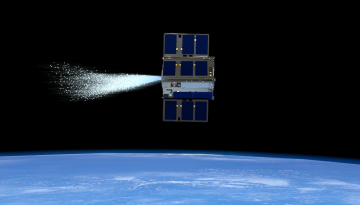
Engineering professor Elaine Petro received an Air Force Office of Scientific Research Young Investigator Program Award to research spacecraft propellants.
First-of-their-kind observations reveal new details about melting at the grounding line of the vulnerable Thwaites Glacier that is contributing to its retreat and potentially to sea-level rise, according to Cornell researchers and international collaborators.
Assistant professors Eshan Chattopadhyay, Debanjan Chowdhury, Andrew Musser, Angeline Pendergrass and Andrej Singer have won 2023 Sloan Research Fellowships from the Alfred P. Sloan Foundation.
Metal oxide nanoparticles – commonly used as food coloring and anti-caking agents in commercial ingredients – may damage parts of the human intestine, say Cornell and Binghamton University scientists.