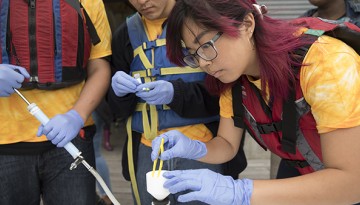
More than a dozen teenage scientists spent their lunch hour Oct. 24 learning from Cornell scientists about the chemistry of the Hudson River.
New research to improve the effectiveness of promising new cancer treatments could prove mutually beneficial to both dogs and people.
The limited racial and ethnic diversity among people in biology-related careers has long roots according to a new study.
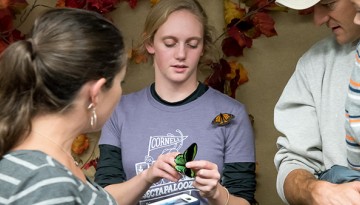
Creepy-crawlers are coming out to play for Insectapalooza 2017, an interactive, hands-on experience for all ages on Oct. 28.
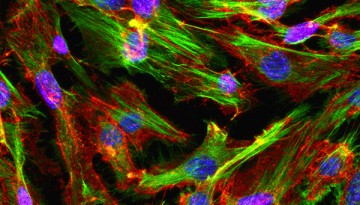
Transplanting young blood vessel cells into older mice can make their aged stem cells take on the characteristics of young stem cells.
The Dean’s Inaugural Symposium on Opportunities for Entrepreneurship and Academic Drug Development was held Oct. 9 at Weill Cornell Medicine.
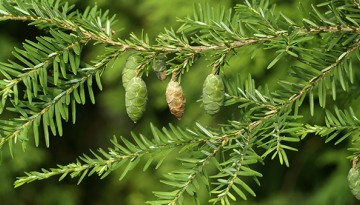
Cornell Botanic Gardens has received a grant from New York State to continue and expand its work to conserve hemlock trees.
The lack of an artificial intestine that mimics conditions in real guts has limited research, until now.
Three renowned neuroscientists spoke at the second annual Cornell Neurotech Mong Family Foundation Symposium Sept. 22.