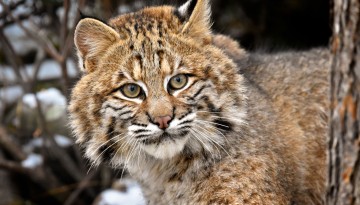
With thousands of strategically placed cameras covering more than 27,000 square miles in central and western New York, Cornell biologists show that bobcat populations remain critically low.
Research involving animal models – for purposes such as developing new vaccines or regenerative medicines – generally employ mice, but new Cornell research has identified another species that could be valuable in this type of work.
The U.S. National Science Foundation has awarded the Cornell High Energy Synchrotron Source $20 million to build a new precision X-ray beamline for research on biological and environmental systems.
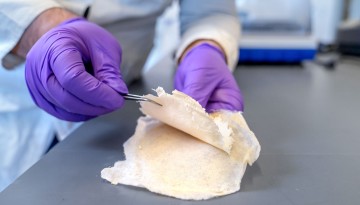
An interdisciplinary team of Cornell researchers has identified an innovative way to harness the antioxidant and antibacterial properties of the botanical compound lawsone to make nanofiber-coated cotton bandages that fight infection and help wounds heal more quickly.
A new book authored by researchers at the Tata-Cornell Institute for Agriculture and Nutrition (TCI) argues that India needs to rethink its social safety nets in order to address these issues and realize its full potential.
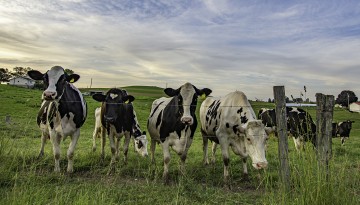
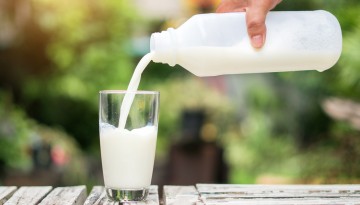
Cornell food scientists show that a standard quality test used for raw, organic milk is insufficient for distinguishing between specific groups of bacteria -- suggesting that criteria needs updating.