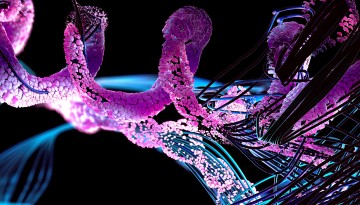
Researchers developed an ultrafast-dissolving nanofiber film that can deliver a cocktail of three drugs so quickly and effectively, 90% of the formulation is released in less than two seconds.
A genetically engineered bacterium can rapidly break down one of Earth’s most abundant minerals, opening a promising new pathway for removing CO2 from the atmosphere and recovering critical elements, according to new Cornell research.
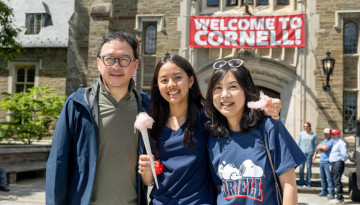
The 3,681 first-year students and 603 transfers who begin moving to campus Aug. 17, hail from 49 states plus Washington, D.C., Puerto Rico and American Samoa, and 62 countries.
Using a photochemically driven labeling technique, a Cornell-led research group has devised a way to capture cancer-specific protein-to-protein interactions, which could spawn targeted therapies for prostate and other forms of the disease.
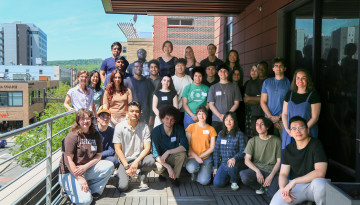
The August Startup Cornell podcast features doctoral students Doris Xu and Katrina Davis, two founders who were part of a summer Prototyping Hardware Accelerator at Rev: Ithaca Startup Works, a business incubator and startup workspace in downtown Ithaca.
Researchers found that while the smoother, quieter ride of an electric bus was appealing to those who already rode public transportation, those advantages weren’t enough to lure drivers away from their cars.