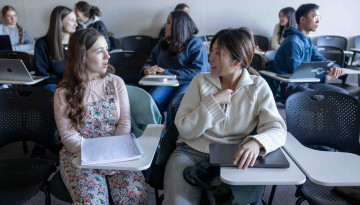
An innovative major in the College of Arts & Sciences is being expanded and refined to highlight its combination of science, social science and the humanities and its relevance to careers today.
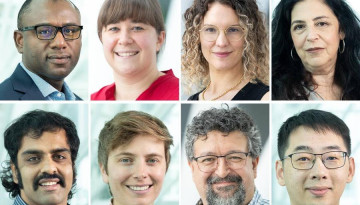
Twenty new faculty have joined the College of Arts & Sciences this year, strengtheningdepartments and programs with their wide-ranging expertise and filling numerous leadershiproles for the College and university.
Cornell University welcomed more than 180 researchers, students, industry partners and federal leaders to Ithaca July 22–23 for the 2026 SUPREME Annual Review,
Geoffrey Coates was named a co-winner of the prestigious Balzan Prize for his work transforming renewable feedstocks and recovered carbon dioxide into high-performance, degradable and recyclable materials.
Researchers will be able to track the brainwaves of animals as they move in natural habitats and interact with each other – complex behaviors that have been impossible to study in the lab.
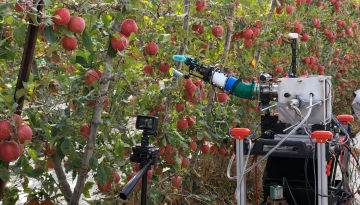
A Cornell-led research project is developing robots that can perform labor-intensive orchard operations; it’s supported by a four-year, $7.5 million grant from the U.S. Department of Agriculture’s Specialty Crop Research Initiative.
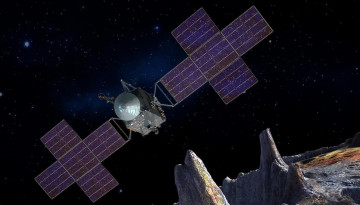
During the 2026 Terzian Lecture hosted by the astronomy department, Psyche Mission PI Lindy Elkins-Tanton will discuss the spacecraft’s journey to the metal-rich asteroid Psyche and upcoming discoveries.