Joe Halpern, ‘towering’ computer scientist and mentor, dies at 72
By Louis DiPietro
Joseph “Joe” Halpern, a pioneering computer scientist whose profound impact advanced not only his own field but philosophy, economics and artificial intelligence, died Feb. 13 in Ithaca. He was 72.
In addition to his scholarship, Halpern was a beloved professor and mentor who influenced generations of students during his 30 years at Cornell.
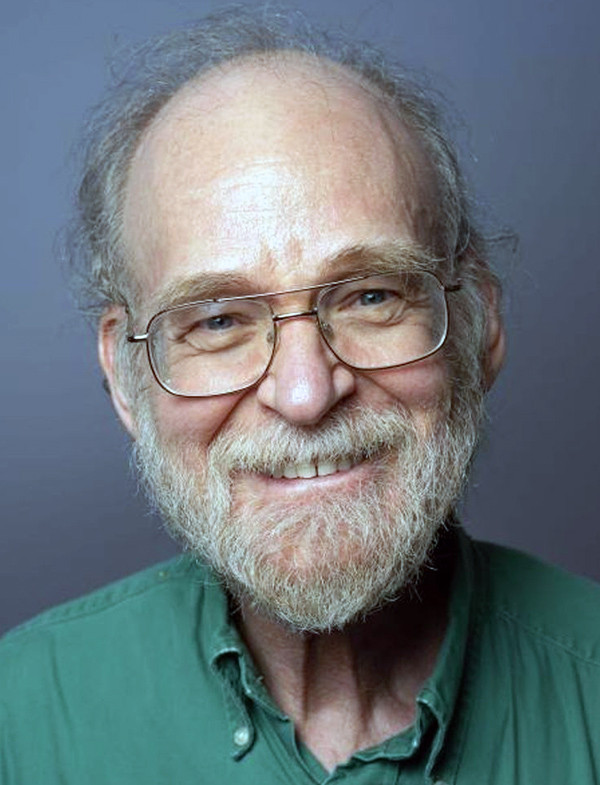
Joe Halpern
A recipient of some of the highest honors in computer science – including the Gödel Prize, the Edsger Dijkstra Prize and the Allen Newell Award, Halpern was a trailblazing researcher in reasoning about knowledge and uncertainty, causality and multi-agent and distributed systems. He co-authored three books and contributed to more than 300 research papers over the course of his 45-year career.
“He was a towering figure in theoretical computer science and a beloved faculty member,” said Lorenzo Alvisi, the Tisch University Professor in Computer Science and chair of the Department of Computer Science in the Cornell Ann S. Bowers College of Computing and Information Science. “Joe was as close to the ideal of a Renaissance man as I have met.”
Halpern traveled extensively, spoke five languages, summited Kilimanjaro and filled his days with music. Professionally, he was a polymath – he pursued varied academic interests and, in turn, pushed the boundaries of what it means to be a computer scientist. During a talk at Princeton University, Halpern described himself as “someone with a Ph.D. in mathematics, who calls himself a computer scientist, [who] is giving a talk to economists about a subject mainly studied by philosophers.”
Halpern mixed these broad interests and brought them together in new and exciting ways, said Jon Kleinberg, the Tisch University Professor of Computer Science and Information Science. In the 1980s, Halpern revolutionized how we thought about large computer systems by developing a theory of knowledge that could be applied to these systems. In the subsequent decades, he became one of the key architects of a central tenet of modern AI – that we should understand the intelligence at the heart of AI as a process that agents use to quantify and manage the uncertainty they find in their environments and in their interactions with other intelligent agents, Kleinberg said.
“Watching Joe in action was to see his own mind pursue knowledge in an uncertain world: In his work, he was a creator of beautiful abstractions,” Kleinberg said. “He marveled at how simple concepts often contain so much natural complexity, and he shared all of this with the world, through his writing, teaching and mentorship, through the accomplishments of his students, and his service to the computer science community.”
“He asked new questions that then became central lines of inquiry,” said Fred Schneider, the Samuel B. Eckert Professor of Computer Science. “He then proceeded to develop new frameworks that not only led to the answers but also provided a new lens for viewing the subject.”
His intellect was matched, or even surpassed, by his generosity as a teacher and mentor, Alvisi said.
Halpern’s teaching career began in his early 20s when, in 1975, he spent two years leading the mathematics department at a school in Ghana. He called his time at the Bawku secondary school one of his most cherished experiences. It would spark a lifelong passion for teaching and advising.
Halpern earned his Ph.D. in mathematics from Harvard University in 1981 and, following a postdoctoral fellowship at Harvard, he served as a research staff member at IBM Research for nearly 15 years. In 1996, he joined Cornell’s Department of Computer Science as a professor. Over the next three decades at Cornell Bowers, Halpern taught a range of courses – from introductory calculus, linear algebra and discrete mathematics to graduate-level courses in reasoning about knowledge, reasoning about uncertainty, and decision theory. He served as chair of the Department of Computer Science from 2010 to 2014 and was named the Joseph C. Ford Professor of Engineering in 2017.
“He approached teaching with joy and an unwavering belief in students’ potential,” Alvisi said. “Above all, Joe embodied a dedication to research, scholarship, and community that is rare and inspiring.”
Among his many awards and honors, including several teaching and advising awards, Halpern was a member of the National Academy of Engineering and a fellow of associations including the Association for Computing Machinery, the Institute of Electrical and Electronics Engineers and the American Association for the Advancement of Science. He was a past recipient of Guggenheim and Fulbright fellowships.
“The field appreciated him,” Kleinberg said. “His colleagues appreciated him – they treasured their collaborations with him – not just for his technical insights but for his calm, patient, undaunted, perpetually respectful, perpetually forgiving approach to working with others.”
Halpern is survived by his wife, Gale, and his children Sara, David and Daniel.
A memorial service was held Feb. 16, in Ithaca.
Louis DiPietro is a writer with the Cornell Ann S. Bowers College of Computing and Information Science.
Media Contact
Get Cornell news delivered right to your inbox.
Subscribe