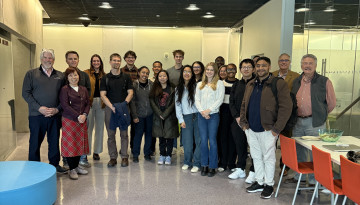
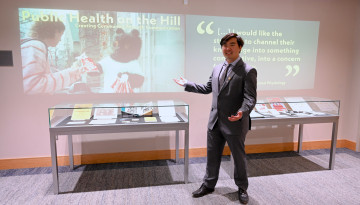
From advanced microscopes that peer deep into living tissue to software that maps transportation emissions, Cornell students presented commercialization strategies for technologies developed by engineering faculty during the Innovation Collaborative final presentations on May 1 in Gates Hall.
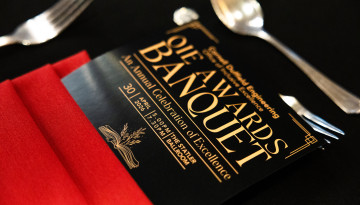
The Office of Inclusive Excellence in the Cornell Duffield College of Engineering recognized outstanding undergraduate and graduate students, student organizations and staff at their Annual Awards Banquet on April 30.
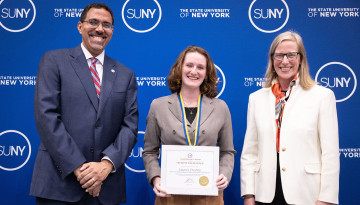
Nine students and recent graduates representing Cornell’s four contract colleges have been chosen to receive the 2026 State University of New York (SUNY) Chancellor’s Award for Student Excellence.
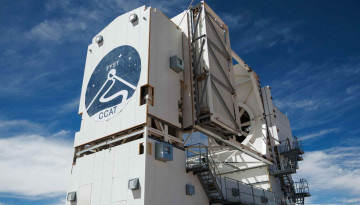
Presenters at the workshop explained how Cornell's Fred Young Submillimeter Telescope (FYST) promises a leap forward in our understanding of galaxy, star and planetary formation processes.
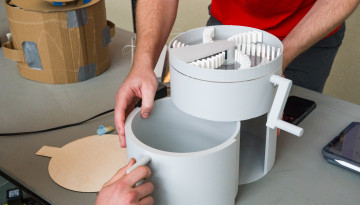
Nearly 200 Cornell Duffield Engineering students exhibited handheld scrapers for insect egg masses, automated vineyard net-lifting systems, and even early-stage mechanical sorters designed to separate invasive spotted lanternflies from harvested grapes.