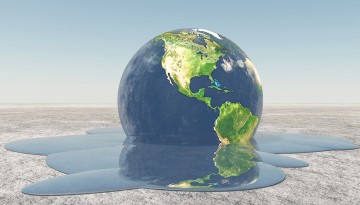
Almost all U.S. politicians tweet about climate change based on party affiliation and the opinion of their constituents, not actual climate risk to the areas they represent, a new multidisciplinary study found.
Cornell's New York Youth Institute announced the selection of 20 high school students who will represent New York State as delegates to the 2021 World Food Prize Global Youth Institute.
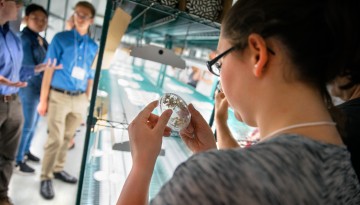
The pathogen listeria soon may become easier to track down in food recalls, thanks to a new genomic and geological mapping tool created by Cornell food scientists.
At Cornell, the Community Learning and Service Partnership (CLASP) program is breaking the mold by forming mutual learning opportunities between students and employees, providing an innovative approach to lifelong learning, mentoring and cross-cultural communication right on campus.
According to new research co-led by Jonathon Schuldt ’04, associate professor of communication, family values are a much stronger predictor of climate opinions and policy support than political views for U.S. Latinos.
Thanks to Cornell researchers and their colleagues, a dataset of thousands of experiments is publicly available, providing insight into fields like political science, communication, psychology, marketing, organizational behavior, statistics, computer science and education.
Max Pfeffer, a distinguished researcher of rural and urban communities and a leader who helped reshape the College of Agriculture and Life Sciences for the 21st century, is now emeritus professor of global development.
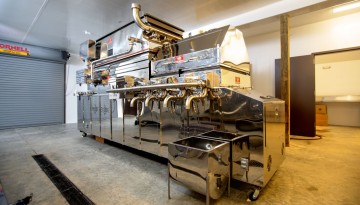
The Cornell Maple Program has opened an advanced, New York state-funded maple research laboratory, an upgrade that will enable research on making high-quality syrup, and new and existing maple products – all at commercial scales.
Besides a stray feline Roomba, very few people are investing energy into putting clothes on robots. Researchers from Cornell Tech and NYU say that now’s the time to think more actively about when, how and why we would dress them