Ariel Ortiz-Bobea, associate professor at Dyson, and collaborators have found that a law regulating wine production in 1930s France, known as the AOC, resulted in a 7% net increase in industry welfare, and set the standard for quality control.
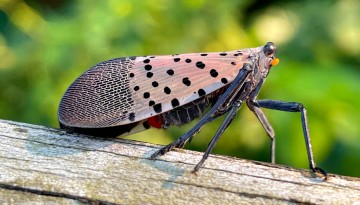
The spotted lanternfly – an invasive, destructive pest with a wide range of hosts including grapes, apples, hops, maple and walnut – has spread to a growing number of counties in New York state.
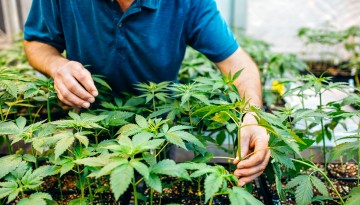
A new Cornell study debunks misinformation on websites and in news articles that claim that environmental or biological stresses – such as flooding or disease – cause an increase in THC production in hemp plants.
The 2020 nationwide lockdown India imposed in response to the COVID-19 pandemic caused disruptions that negatively impacted women’s nutrition, according to a new study from the Tata-Cornell Institute for Agriculture and Nutrition.
Two new publications examining cassava flowering reveal insights into the genetic and environmental factors underpinning one of the world’s most critical food security crops.
A new study describes how an interdisciplinary team of Cornell researchers used a state-of-the-art microscopy technique to reveal protein structures and key steps of a CRISPR-Cas system that holds promise for developing an improved gene editing tool.
Cornell researchers will develop the first high-resolution carbon monitoring system for East Africa that combines “bottom up” ecological modeling with “top down” satellite data, thanks to a three-year, $1 million NASA grant.
Lead New York, a leadership development program for adult professionals in the food, agriculture and natural resource sectors, has announced the members of its 19th class.
Breeding Insight, a new program funded by the U.S. Department of Agriculture through Cornell University, will share latest tools with breeders in the U.S.