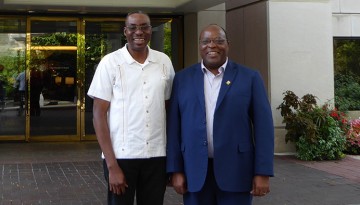
Cornellians Stephen Mugo, Ph.D. ’99, and former postdoctoral student Sylvester Oikeh came full circle recently when they returned to the university Oct. 7 to share the story of how they’ve used their education for humanitarian purposes in Africa.
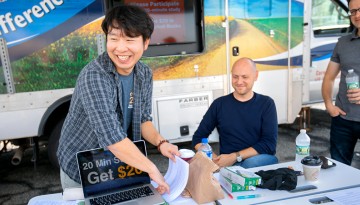
Cornell’s mobile communication lab, one of a handful in the country, is changing the face social sciences research. It enables scholars to study the socio-economic, racial and geographic groups hardest hit by society’s problems.
Cornell researchers will tap into genetic information found in more than 700 species of related grasses to improve maize and sorghum, thanks to a $5 million grant from the National Science Foundation.
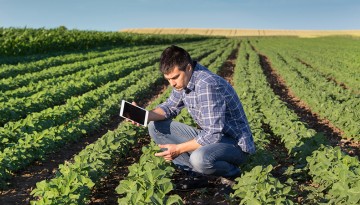
In response to the call to action for feeding an ever-growing global population, the Cornell Initiative for Digital Agriculture is taking a multidisciplinary approach to the complex challenge.
Cornell was recognized by the U.S. Environmental Protection Agency and Center for Resource Solutions with the Leadership in Green Power Education Award Oct. 10.
The university is launching two new multicollege departments – one in statistics and data science, and one in computational biology – to meet evolving research needs, encourage collaboration, and improve the quality of teaching and learning in these increasingly essential fields.