To rapidly detect the presence of E. coli in drinking water, Cornell food scientists now can employ a bacteriophage – a genetically engineered virus – in a test used in hard-to-reach areas around the world.
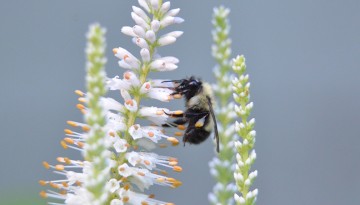
A Cornell study of strawberry crops on New York farms tested the effectiveness of wildflower strips for attracting pollinators to crops, with findings that could uncover the plant species most likely to produce optimal results.
Cornell will conduct a survey of the sub-terrain on campus and in the towns of Ithaca and Dryden Sept. 21-25, the next step in its plan to implement Earth Source Heat.