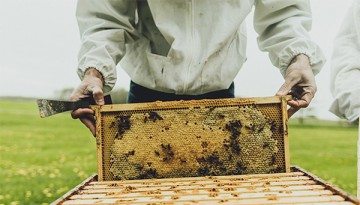
A small mite is causing big trouble for New York state's honeybee population and putting in peril the fruit and vegetable crops that depend on these pollinators.
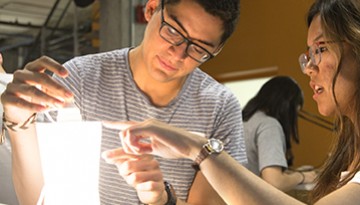
Cornell and IBM announced a joint research project June 23 that will use genetic sequencing and big-data analyses to help keep the global milk supply safe.
A class of enterprising women aspire to "make it" in the social media economy but often find only unpaid work, says Brooke Erin Duffy, assistant professor of communication, in her book, "(Not) Getting Paid to Do What You Love."
The U.S. public doubts the existence of "global warming" more than it doubts "climate change" – and Republicans are driving the effect, according to new research. But there's more agreement on climate science than meets the eye.
In the year 2100, more than 2 billion people - those who live on islands or along coasts - could become climate change refugees due to rising sea levels, according to Cornell researchers.
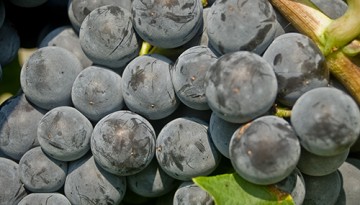
Big on flavor, aroma and size, Cornell's newest grape lacks one defining feature: a name. Grape breeder Bruce Reisch ’76 is offering the public the chance to name it.
Geneticist Paula Cohen has won $100,000 Gates Foundation grant to develop a radical approach to contraception: preventing the sperm cell from developing, before it ever reaches the egg. She was chosen from 1,600 applicants.
Eight teams of entrepreneurs are spending their summer developing their business ideas into products at Rev: Ithaca Startup Works' Hardware Accelerator.
Vice Provost Rebecca Stoltzfus presented Cornell faculty members Austin Bunn, Ella Maria Diaz, Michael Goldstein and Irby Lovette with 2017 Kendall S. Carpenter Memorial Advising Awards May 27.