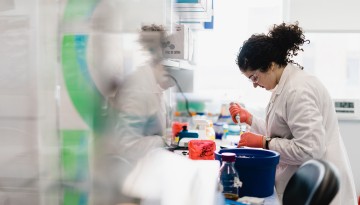
Food Science Professor Julie Goddard’s research team has engineered unique enzymes to break down microplastics in sewage and wastewater, a major route of microplastic pollution into the environment.
The Center for Research on Programmable Plant Systems is welcomes the 2024 cohort of the National Science Foundation-funded Research Experiences for Undergraduates program.
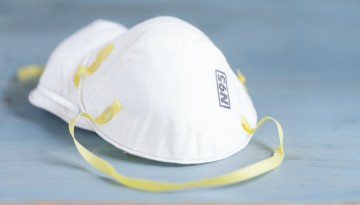
The new research provides findings about the value of masks that fit snugly around the face in everyday use and how human behavior affects their efficacy.
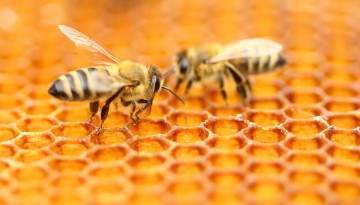
Marina Caillaud, a senior lecturer in the College of Agriculture and Life Sciences, discusses stressors on bee colonies in an episode of the Cornell Keynotes podcast.
Sammi and John Collins are participants in the second cohort of Cornell’s Dairy Runway Program, which offers free entrepreneurship training for early stage innovators aiming to launch new dairy products.
Sixteen faculty and staff in Cornell’s contract colleges have received 2023-24 State University of New York Chancellor’s Awards for Excellence, which recognize superior professional achievement.
Broome County is enlisting the expertise of Cornell researchers and other specialists to implement advanced “smart city” technology, aiming to potentially enhance flood warnings, provide real-time parking updates and optimize waste management.
A multidisciplinary team of researchers tested several methods of data visualization in an immersive virtual reality classroom to give teachers a way to gauge how their gaze was distributed.