Cornell has a long-standing commitment to help lead the fight against climate change, and on April 2 it became a founding member of the International Universities Climate Alliance.
Virtual events and resources at Cornell include: Images of Dragon Days past; Cornell experts discuss COVID-19; “Cosmos” and spotlight on women artists at the Johnson Museum; student theater and film updates; and a citizen science project surveying breeding birds.
The Office of Faculty Development is using remote conferencing technology sessions to hold faculty workshops during the Coronavirus on topics ranging from what's next in academic book publishing to how to write an op-ed.
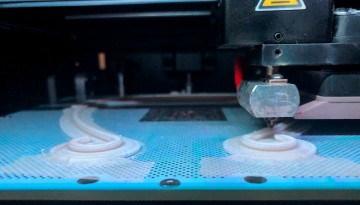
Students, faculty, staff, alumni and community members are working together around the clock to 3D print protective visors for medical workers at Weill Cornell Medicine and local hospitals.
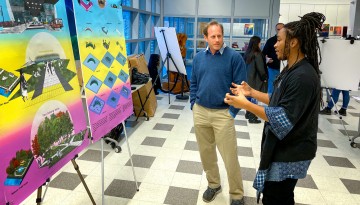
Cornell graduate students studying landscape architecture examined Ossining, New York – a town on the rising Hudson River last fall, and presented ideas for climate-change adaptation.
NYSERDA will give Cornell $1.65 million in incentives for energy studies and project work to develop a smaller carbon footprint for campus, toward the university’s net-zero carbon goal by 2035.
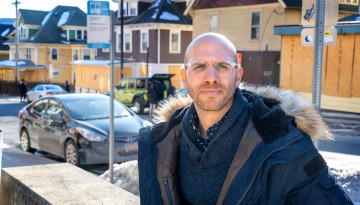
New research co-authored by Nicholas Klein in the Department of City and Regional Plannning studies improper scooter, e-bike and motor vehicle parking in five U.S. cities.
Eleven early-career faculty members from six colleges and schools will participate in yearlong fellowships advancing ambitious research projects in the social sciences.
Cornell faculty members are finding answers to questions related to a world on the move with a boost from Cornell’s first Migrations grants, awarded by the “Migrations” Global Grand Challenge.