In a new paper, researchers take a step toward the day when deep learning will enhance scientific exploration of natural phenomena such as weather systems, climate change, fluid dynamics, genetics and more.
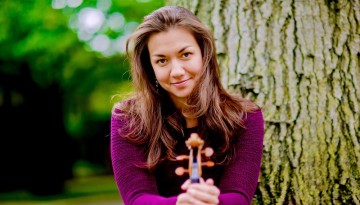
“Gayageum, Meet Violin” is a recital and discussion, set for April 16, featuring a preview performance of a new composition “Apba Hagoo, Nah Hagoo” by Ariana Kim for the Korean traditional zither (gayageum) and violin.
Three teams have been awarded Public Issue Network Grants, providing up to $30,000 in funding for each project over three years. The grants support faculty, staff, students, alumni and community partners as they weave broader, more effective networks of potential collaborators, coordinate resources and increase the impact of their work on a particular social issue.
J.J. Zanazzi, Ph.D. ’18, has been selected for a 2022 51 Pegasi b Fellowship, which provides exceptional postdoctoral scientists with the opportunity to conduct theoretical, observational, and experimental research in planetary astronomy.
Four doctoral students studying fields in the College of Arts & Sciences are the inaugural recipients of the Zhu Family Graduate Fellowships in the Humanities.
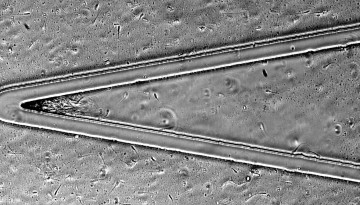
Forget sending bull semen out for complicated laboratory tests to learn whether the agricultural animal is virile. Cornell scientists have developed a faster, easier microfluidics method.
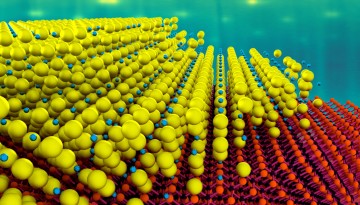
A team of researchers at Cornell’s Center for Bright Beams has developed a technique to address limitations with photocathodes, which are vital to the performance of some of the world’s most powerful particle accelerators.
The chapter, "AI and International Politics," is a broad look at the opportunities and risks that the proliferation of AI technology holds for international politics.